Food scraps do not have one nationwide disposal rule. The right route depends on what the food is, whether it is still edible and what your local collection program accepts. Start with prevention or donation for usable food. For peels, coffee grounds and spoiled food, check for a municipal food-scrap cart, a staffed drop-off or a backyard compost system.
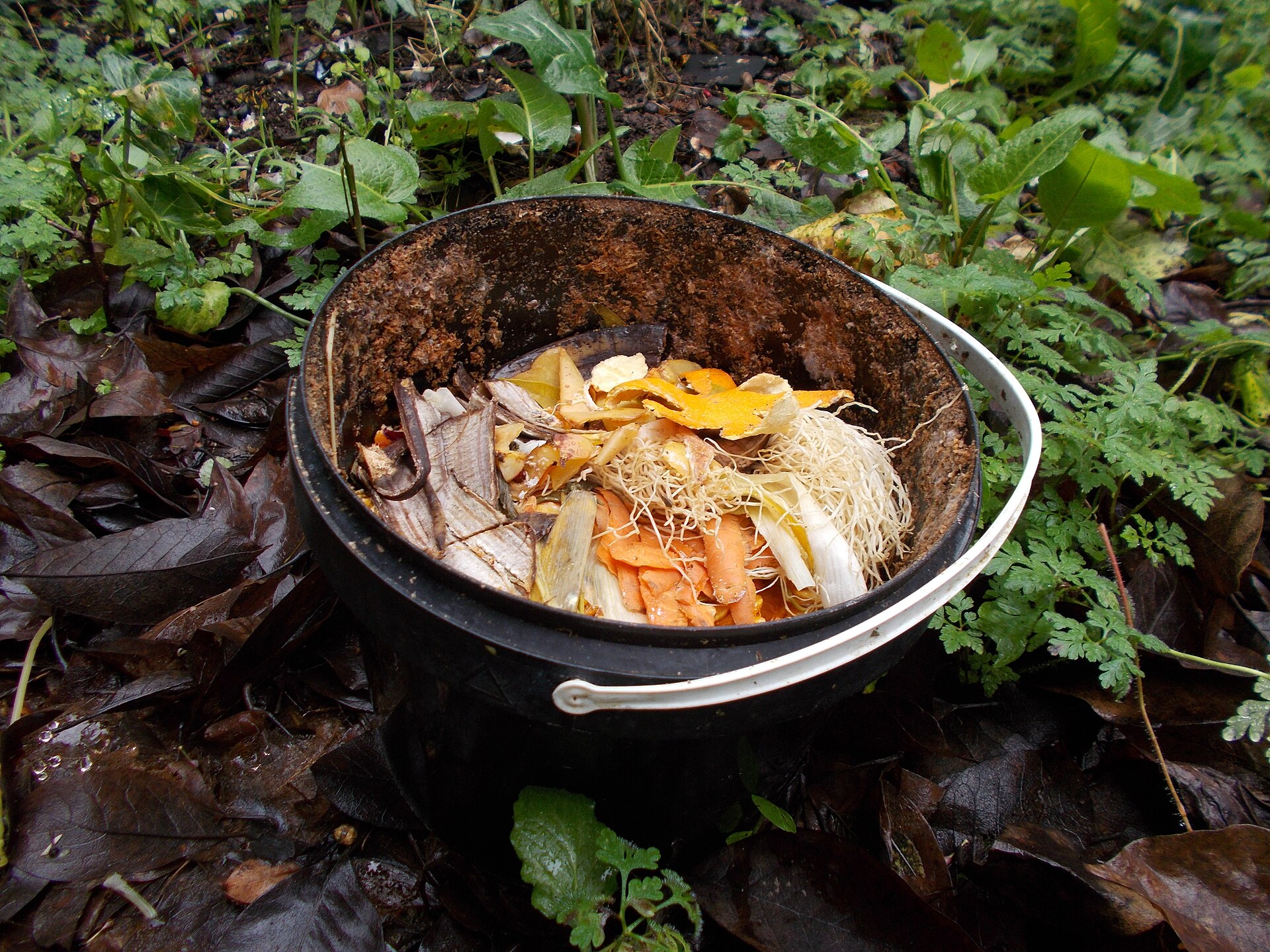
Photo: Kitchen waste collection bucket. Benitronne, 4 January 2023. CC0 1.0 · Source. Resized for web.
Use food before treating it as waste
The US EPA’s Wasted Food Scale puts prevention, donation and upcycling ahead of composting and disposal. If food is safe to eat, use it, freeze it or offer it through a local food-rescue program. Composting is for the material that cannot be eaten or donated.
Do not pour food scraps, oil or grease down a sink just because a garbage disposal can grind them. EPA treats food sent through the sewer as a separate management route, and local sewer rules may prohibit grease and other material that can block pipes.
Curbside food scraps and drop-off sites
A municipal or commercial organics program can often take more than a backyard pile, but its accepted list controls. Meat, bones, dairy, cooked food and certified compostable bags may be allowed at one facility and refused at another. “Compostable” packaging is not automatically accepted. Keep produce stickers, ordinary plastic bags, glass, foil, pet waste and other contamination out unless the operator explicitly says otherwise.
Before setting out a pail or driving to a site:
- Check the program’s current accepted-material list.
- Confirm whether material must be loose, in a paper bag or in a named certified liner.
- Check residency rules, fees, collection frequency and proof-of-address requirements.
- Use a tight-lidded kitchen container. Freeze particularly wet or odorous scraps until collection day if that fits your program’s rules.
- Remove every piece of packaging before the scraps enter the cart.
New Bedford, Massachusetts shows why the local instructions matter. Its free Recycling Center program accepts unpackaged food, bones, seafood shells and coffee grounds, loose or in BPI-certified compostable bags. The city says ReMix Organics empties and cleans the carts, then sends the material to partner farms and an anaerobic-digestion facility. The same drop-off refuses ordinary plastic bags, packaged food, pet waste, foil, glass and yard waste. New Bedford also has a separate paid curbside subscription, so the free drop-off and curbside service should not be treated as the same program.
Backyard composting
EPA’s home composting guide recommends balancing nitrogen-rich “greens” with carbon-rich “browns,” plus air and moisture. Fruit and vegetable scraps, coffee grounds and paper filters, paper tea bags without staples and crushed eggshells can go in a typical backyard pile. Dry leaves, untreated wood chips, plant stalks, uncoated brown cardboard and non-glossy paper supply the browns.
EPA suggests two to three parts browns by volume for every one part greens. Cover food scraps with four to eight inches of dry leaves or other browns, turn the pile occasionally and keep it about as damp as a wrung-out sponge. A sour or rotten smell usually means the pile is too wet or short of air; mix in dry browns and turn it.
A normal backyard pile should not take meat, fish, bones, dairy, fats, oils, greasy food, pet waste, treated wood, glossy paper, produce stickers or compostable service ware. These materials can attract animals or may not break down at backyard temperatures. A commercial facility may accept some of them, but only its own list can answer that.
What not to put in a food-scrap container
- Ordinary plastic bags, even when used as liners.
- Produce stickers, rubber bands, twist ties and packaging.
- Glass, cans, foil, cutlery and conventional plastic.
- Diapers, sanitary products, pet waste and cat litter.
- Yard waste when the program is food-only.
- Liquids, grease or cooking oil unless the program names them.
- “Compostable” cups, plates or bags that lack the required certification or are not accepted locally.
Contamination can cause a collector to leave the cart or a processor to reject a load. When the accepted list is unclear, put the questionable item in the trash and keep the food-scrap stream clean.
If there is no collection program
Backyard composting works for many plant-based scraps if you have space and can maintain the pile. Worm composting is another small-space option described by EPA. If neither is practical, use the household trash rather than dumping scraps outdoors, in a storm drain or into somebody else’s organics cart.
Look for a city-run drop-off before assuming none exists. The drop-off locations directory and States & Cities guides list official resident facilities where Trashbagging has verified them.