
Honolulu residents in six neighborhoods can now put food scraps and wasted food in the green compost cart they already have. The City and County of Honolulu Department of Environmental Services (ENV) started its G.R.O.W. (Green Recycling Organic Waste) pilot on April 1, 2026, for homes with city automated curbside collection in Waipahu, Nānākuli, Hawaiʻi Kai, Mililani, Kailua and Kalihi (City and County of Honolulu).
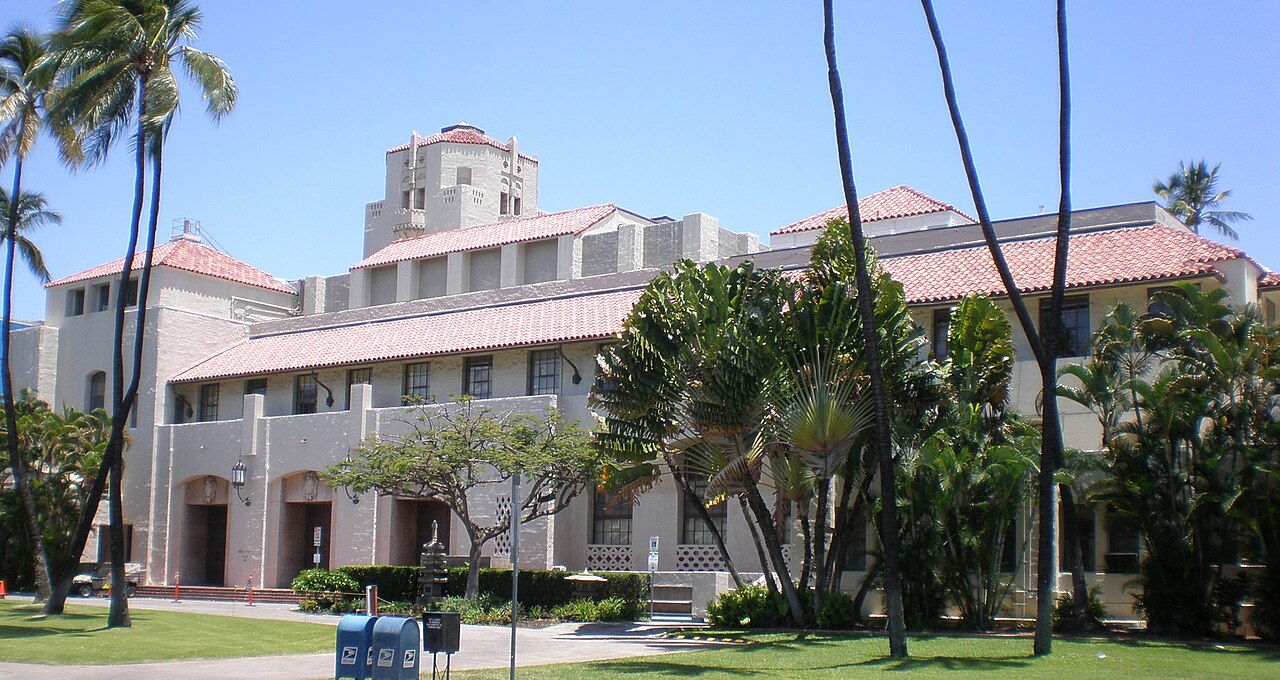
Photo: Honolulu Hale, the City Hall of Honolulu. Joel Bradshaw, 2009-04-25. Public domain · Source. Resized for web.
Who is in the pilot
The pilot covers the six neighborhoods and their surrounding areas, and only homes that get the city’s automated cart service. ENV’s FAQ says households in the pilot areas were sent a mailer in February or March 2026 inviting them to take part. Kailua and Mililani went first, with green cart pickup on April 1 (ENV news release, March 31, 2026). The FAQ says there is no added cost.
How pickup works
Nothing changes about the schedule. ENV says collection schedules stay the same, and the FAQ says food scraps go out with green waste as part of regular collection every other week.
At home, keep scraps in a kitchen pail or reusable silicone bag, which ENV provides, and empty it into the green compost cart. Plastic bags and compostable liners, including BPI-certified compostable and biodegradable bags, cannot go in the green cart.
The cart’s contents go to the Hawaiian Earth Recycling composting facility at 65-1101 Wilikina Drive, Wahiawā.
What goes in the green cart
- Yes: fruits and vegetables; cheese, yogurt and other dairy solids; bread, pasta, rice and grains; beans, nuts and seeds; meat, seafood, poultry and bones; eggshells and seafood shells; leftovers and plate scrapings; loose coffee grounds and tea leaves. Green waste still goes in too.
- No: liquids; paper; plastic, metal and glass; fats, oils and grease; products labeled compostable or biodegradable; pet waste; coffee cups, takeout containers and pizza boxes; produce stickers and twist ties; dirt, rocks and plant pots.
Why the city is doing it
The FAQ ties G.R.O.W. to the city’s goal of 95% landfill diversion by 2030, set in its 2019 Integrated Solid Waste Management Plan Update. Organics make up 36% of Oʻahu’s waste stream, and food waste alone is 20%. About 60,000 tons of food waste a year comes from homes, according to the FAQ.
What comes next
The G.R.O.W. page says the city will expand the program islandwide, and the FAQ says the city will announce when every resident can add food scraps. The page now also carries a city video titled “G.R.O.W. Goes Islandwide October 1st.”
A separate ENV service alert says that from October 1, 2026, to January 31, 2027, the city will not take gray cart monitoring requests or requests for more green or blue carts. Those requests open again on February 1, 2027.
What this is not
G.R.O.W. does not change the gray refuse cart or the blue recycling cart, and it is not a bagged food waste service. It covers only homes on city automated cart collection.


