
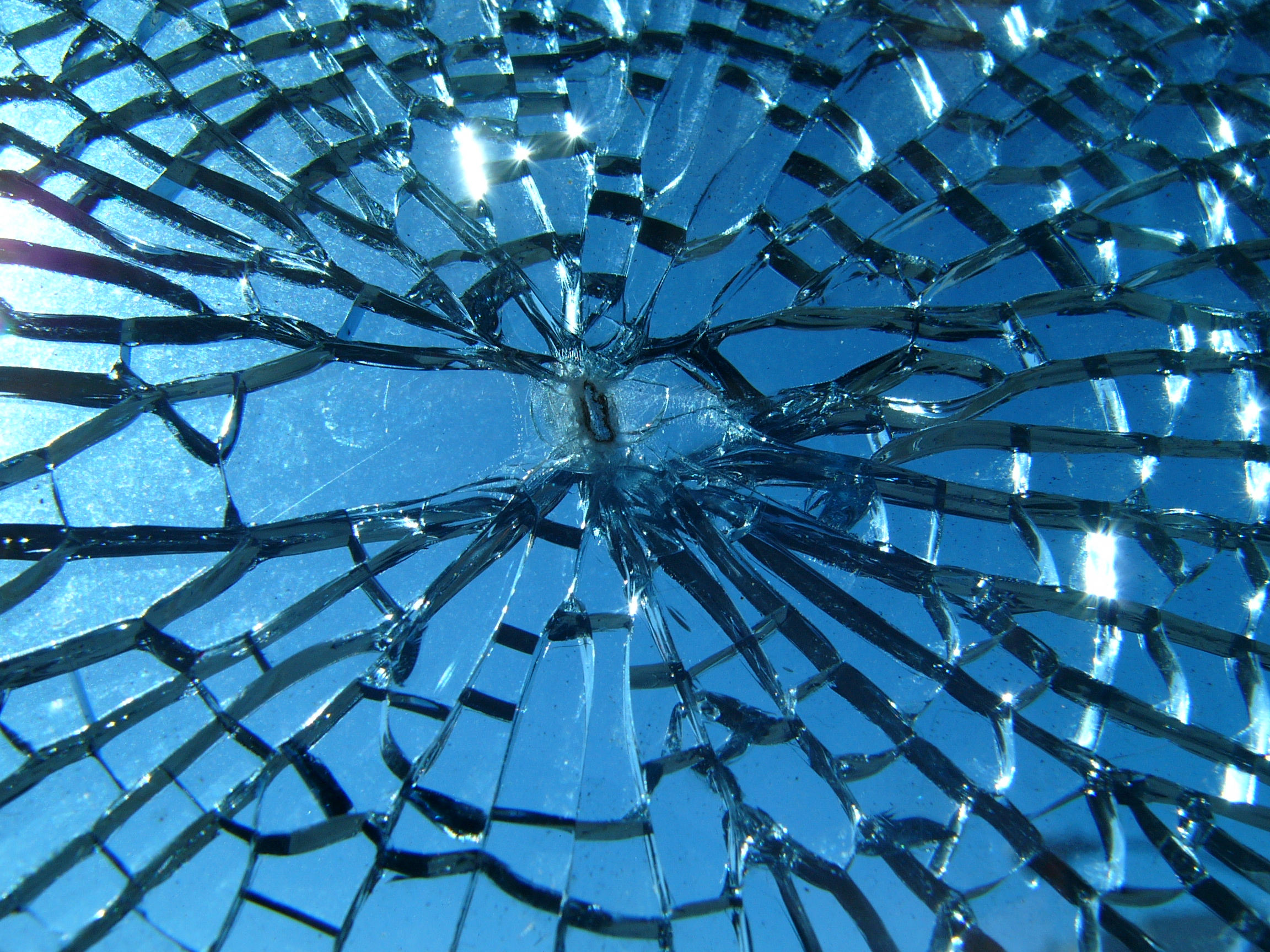
How to dispose of broken glass depends on what broke and where you live. A bottle, a drinking glass and a window pane may have different destinations. Keep sharp pieces contained while you check your waste authority’s instructions. New York City specifies a sealed, labeled cardboard box for broken glass; Charlotte directs residents to bag shards and put them in the rollout container.
Photo: Broken glass, Jef Poskanzer, March 13, 2008, CC BY 2.0.
What is true everywhere
Do not assume that a recycling cart is the right destination just because the material is glass. EPA’s recycling guidance directs people with broken glass to their local waste authority, rather than putting sharp pieces into ordinary waste streams without instructions. Its advice reflects the injury risk to people handling the material.
The local answer can specify a way to contain shards for trash collection. That is the important distinction between the broad federal guidance and the detailed city examples below: neither example is permission to leave loose sharp pieces in a bag or cart.
Separate the material question from the packaging question. First establish whether the item belongs in recycling, trash or a special collection. Then follow the collector’s instructions for wrapping, bagging, boxing, labeling and set-out. A recycling symbol on another part of an item does not settle either question.
Where it turns local
New York City: labeled box for shards
New York City’s city guide covers residential garbage collection; the New York hub links the wider state resources.
The Department of Sanitation accepts glass bottles and jars in its metal, glass, plastic and cartons recycling stream. It excludes drinking glasses, eyeglasses, glass furniture, mirrors and windows from that stream. Those excluded glass items go with trash under the city’s preparation rules.
For broken glass, NYC311 directs residents to use a cardboard box labeled “broken glass,” seal it with tape, and put the box in the trash container or a securely closed garbage bag. Small pieces can be wrapped in newspaper and taped before disposal. The city’s recycling page also calls for double-bagging broken glass to protect workers.
Do not turn that instruction into a blanket rule that a cardboard box can sit beside the curb. The residential trash-container and set-out requirements still apply. Check the city’s residential trash rules for the building’s collection arrangements.
A mirror or window is not a recyclable bottle. The Department of Sanitation calls for taping large pieces of glass to prevent injury. Where an item is too large for ordinary trash, use the city’s item-specific guidance before setting it out. The city’s Special Waste Drop-Off Sites are not a general dumping service for broken household glass.
Charlotte: shards in the rollout container
The Charlotte trash pickup schedule explains the city’s collection system; the North Carolina hub covers state resources.
Charlotte’s bulky-item eligibility sheet distinguishes intact glass items from shards. For glass doors, mirrors and windows, it specifies tape in an X on both sides and boxing marked for glass. For glass shards, it directs residents to bag them and put them in the rollout container. Follow that local distinction rather than treating a pile of fragments as a scheduled bulky item.
Mecklenburg County’s recycling instructions accept glass bottles and jars of any color. They exclude ceramics and household glassware, including Pyrex, vases and picture-frame glass. A broken drinking glass therefore does not become acceptable recycling simply because bottles are accepted.
The Hickory Grove Disposal and Recycling Center is one of the county’s full-service centers. Its recycling service can be relevant to accepted bottles and jars; that does not make its bottle collection a destination for broken mirrors or other excluded household glass. Check the operator’s accepted-materials list and the record’s access rules before making a trip.
How to find your local answer
- Identify the item: bottle or jar, drinking glass, cookware, mirror, window, bulb or another product.
- Open the municipality’s or county’s official “what goes where” page. Search for the item, not only the word glass.
- Read its packaging instructions as well as the disposal destination. Look for any separate directions for sharp fragments and large panes.
- Check the collection or drop-off rules for your address. A facility accepting bottles does not necessarily accept windows or glass cookware.
- If the official page does not address broken pieces, contact the local waste authority before putting them out.
Our state finder, city pages and drop-off catalog help identify the operator. The operator’s current instructions decide what it accepts.
What this is not
A broken light bulb needs the bulb-specific answer. A CFL or fluorescent lamp is a different product from an ordinary drinking glass; see the light-bulb disposal guide before handling its disposal.
Needles and syringes are also separate. Do not combine them with a box of broken household glass or apply the examples here to medical sharps. EPA treats those as a distinct disposal question.
Glass carrying a chemical residue may need a household hazardous waste answer. The fact that a container is glass does not override the rule for its contents. Use the local program’s instructions rather than rinsing an unidentified substance away.


