
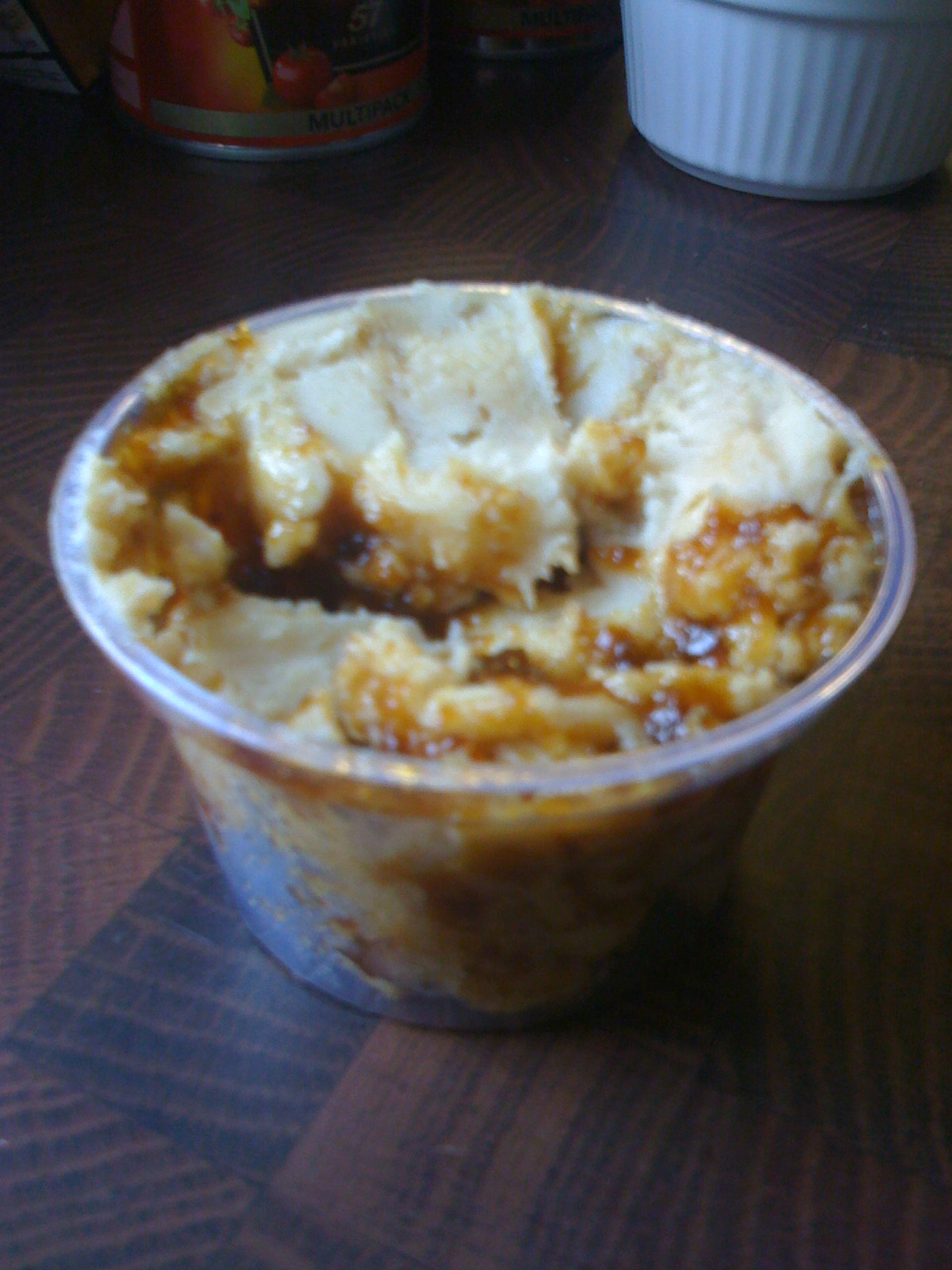
How to dispose of cooking oil and grease at home: let it cool, pour it into a container with a lid, and put it in the trash or take it to a drop-off where your city or county collects it. Never pour it down the sink, toilet or garbage disposal. Grease hardens in pipes, and the U.S. EPA names it the most common cause of reported sewer blockages.
Photo: Rendered beef fat with brown sediment and stock left from a roast, Yorkshire, England. naughty architect, 2009-01-21. CC BY 2.0 · Source. Resized for web.
Seattle, San Antonio and Hillsborough County, Florida, show how the local answer changes. Each place’s rules below are its own.
Why grease never goes down the drain
- It blocks sewers. The EPA lists fats, oils and grease among the materials that cause sanitary sewer overflows, the release of untreated sewage from a city sewer. An EPA report to Congress found grease from restaurants, homes and industry to be the most common cause of reported blockages, at 47%. Grease solidifies, narrows the pipe and blocks the flow.
- Hot water and soap do not fix it. Seattle Public Utilities says grease may look like it washes away, but it cools and sticks inside pipes. A garbage disposal only breaks food into smaller pieces, and the grease still clogs.
- Liquid oils count too. Many cooking oils, such as olive oil and coconut oil, harden in cooler pipes, Seattle Public Utilities says.
- Grease is more than frying oil. The San Antonio Water System (SAWS) lists milk, butter, salad dressing, peanut butter, lard, fried foods, the goo on top of canned goods and cake frosting. If it holds fat, the fat can clog pipes.
What to do with it at home
- Let it cool. Seattle Public Utilities makes cooling the first step. SAWS says to use a container that will not melt.
- Pour it into a sturdy container with a lid. Hillsborough County suggests the original container, a juice carton or another sturdy plastic or wax-coated container. SAWS suggests an empty milk carton or frozen juice container. Do not mix the oil with other liquids.
- Wipe the pan. Wipe the last film of grease off pots, pans and plates with a paper towel before you wash them. Scrape food scraps into the trash, not the sink.
- Trash it or take it to a drop-off. SAWS and Seattle Public Utilities both tell residents to seal the container and put it in the garbage. Some cities and counties also collect used cooking oil for recycling, at the curb or at a drop-off site.
Where it turns local
Seattle: curbside pickup and the compost cart
- Seattle Public Utilities picks up used cooking oil at the curb for free. Set it out on your regular collection day in sealed 1-gallon plastic jugs with your address written on them, next to the recycling cart.
- The limit is two 1-gallon jugs per collection. Cooking oil and motor oil go in separate jugs; mixed oil is refused.
- Small amounts of oil and grease can be wiped up with paper towels or newspaper and put in the compost. Large amounts go into a container with a lid and into the garbage.
San Antonio: the trash or the hazardous waste center
- In San Antonio, SAWS tells residents to collect cooled grease in a container that will not melt, then put it in the garbage when it is full. Small amounts can be wiped up with a paper towel and thrown away.
- Larger amounts can go to the City of San Antonio Household Hazardous Waste Drop-Off Center, 7030 Culebra Road. The city lists cooking oil among the materials it accepts.
- The center is open Tuesday to Friday 8 a.m. to 5 p.m. and Saturday 8 a.m. to noon, except holidays. Bring a recent CPS Energy bill that shows payment of the Environmental Fee, and a photo ID.
Hillsborough County, Florida: CORE drop-off stations
- Hillsborough County runs the Cooking Oil Recycling Effort (CORE) for residential cooking oil.
- CORE stations sit at libraries, parks and recreation centers, utility pump stations and the county’s household hazardous waste collection centers.
- Pour cooled oil into a sturdy plastic or wax-coated container, such as the original container, a juice carton or a CORE jug, and cap it. Do not mix it with other liquids.
- The county warns that oil poured down the drain gels inside pipes, sewer lines and lift stations. That can back up home plumbing and lead to sewage spills and overflows onto streets.
Holiday frying and big batches
Holiday meals leave more grease than usual. SAWS’s holiday reminders give the same advice every year: scrape food bits into the trash before washing, pour used cooking oil into a sealed container, and put it in the trash. For a large amount, check the limits. Seattle’s curbside pickup takes up to two gallons per collection day, and San Antonio’s hazardous waste center takes larger amounts of cooking oil. Check your city’s holiday schedule on the Thanksgiving 2026 trash pickup page before you set out extra trash.
How to find your local answer
- Open your city or county page from States & Cities. Its drop-off and hazardous waste section lists cooking oil where the city or county takes it.
- Search the drop-off locations catalog for a household hazardous waste site or convenience center near you, and check its list of what it takes.
- Look up your sewer utility’s fats, oils and grease page. The utility that runs your sewers, such as SAWS or Seattle Public Utilities, publishes the local grease rules.
- When no program collects cooking oil, cool it, seal it and put it in the trash.
What this is not
- Used motor oil is a different program. Motor oil and car fluids go to their own collection. Seattle takes both oils at the curb, but only in separate jugs, never mixed.
- Restaurant grease is not household waste. Hillsborough County sends commercial and industrial customers to a county-registered grease hauler. San Antonio requires restaurants to use grease traps under a city ordinance. The EPA says restaurants often store used frying oil for pickup by companies that turn it into tallow, animal feed supplements or fuel.
- The compost cart is not a grease bin. Seattle takes only small amounts wiped up on paper towels in compost. Large amounts go in the garbage.
Questions
Can I pour cooking oil down the drain if I run hot water?
No. Seattle Public Utilities says cooking oil and grease cool and stick inside pipes even with hot water and soap, and a garbage disposal does not help.
Can I put used cooking oil in the trash?
Yes, in most places. Let the cooking oil cool, pour it into a sealed container, and put it in the garbage, as SAWS and Seattle Public Utilities advise.
Where can I recycle used cooking oil?
Where your city or county collects it. Seattle picks up cooking oil at the curb, Hillsborough County runs CORE drop-off stations, and San Antonio’s hazardous waste center accepts it.
What container should I use for grease?
A sturdy container with a lid that will not melt, such as the original container, a juice carton or a milk carton. Do not mix the grease with other liquids.
What do I do with grease left in the pan?
Wipe the grease off the pan with a paper towel and put the towel in the trash. In Seattle, small amounts of grease on paper towels can go in the compost.


