
Most leftover medicine should go to a take-back site, not the trash. The DEA’s National Prescription Drug Take Back Day returns October 24, 2026, from 10 a.m. to 2 p.m., but pharmacies, police stations and mail-back programs collect unused pills every week of the year. How to dispose of old medication safely depends on the drug: a short federal list of especially dangerous ones should be flushed, and everything else goes in the trash only after it is mixed with something unappealing and sealed in a bag.
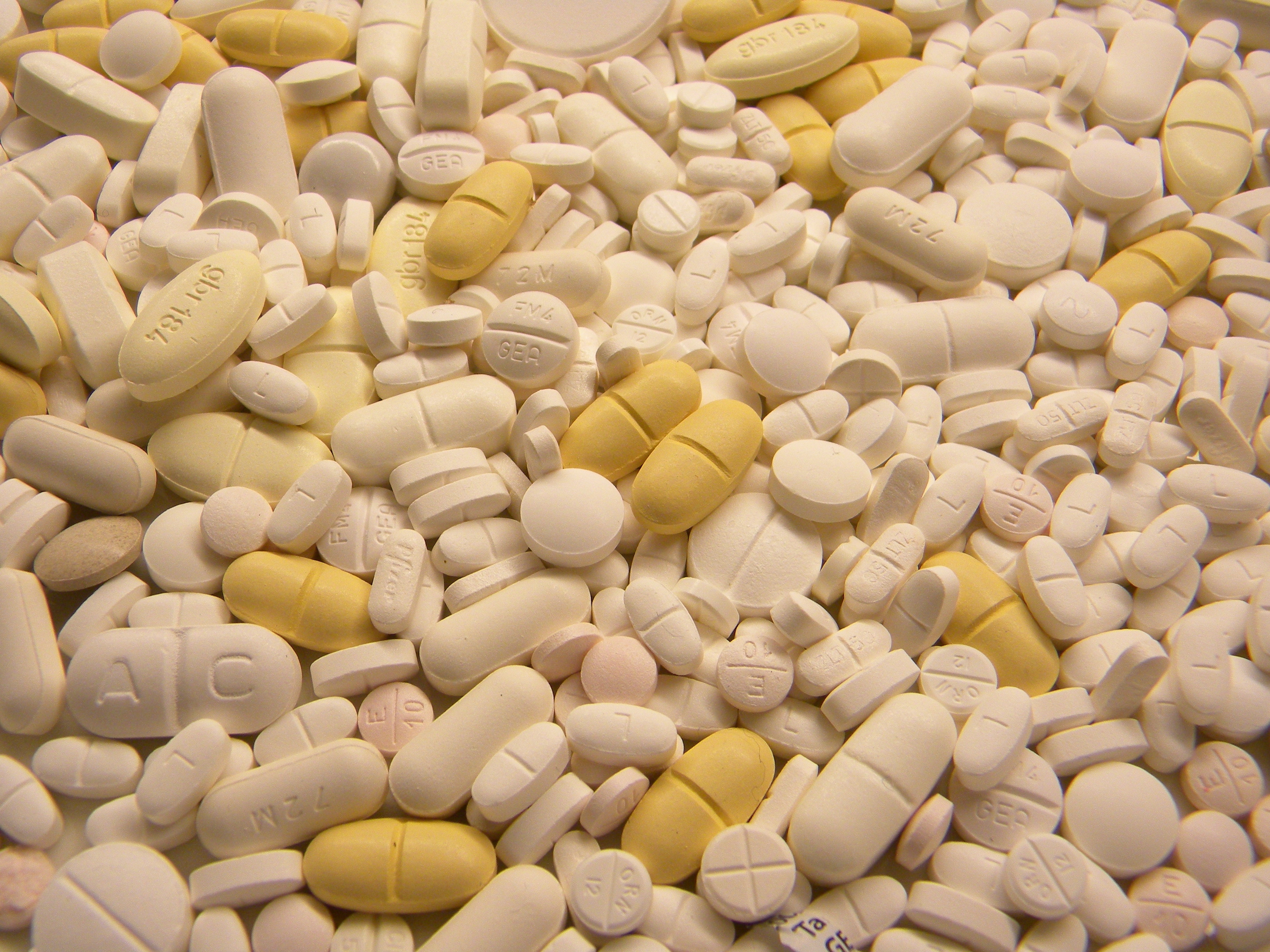
Context photo: Loose prescription tablets and capsules set aside for disposal as medical waste. Pöllö, 2009-12-09. CC BY 3.0 · Source. Resized for web.
Washington, California and New York run three of the country’s state-funded take-back systems. Each state’s rules and numbers below are that state’s own.
Year-round options for unused medicine
- A DEA-authorized collector. Retail pharmacies, hospitals with an on-site pharmacy and law enforcement offices can register as year-round drop-off locations. The DEA’s own locator finds the nearest one by ZIP code.
- A prepaid mail-back envelope. Many pharmacies and community sites hand out free, postage-paid envelopes; fill one, seal it and drop it at any U.S. Postal Service office or blue collection box.
- A state take-back program. Washington, California and New York each require drug manufacturers to fund statewide kiosks and mailers, at no charge to the person disposing of the medicine — see the state programs below.
- Hospital-based collection, for sharps. Needles and other self-administered sharps are handled separately from pills; New York, for one, requires every hospital in the state except federal facilities to collect household sharps.
The FDA flush list
The FDA tells people not to flush medicine down the toilet or sink unless it appears on its flush list — a short set of drugs picked because a single accidental dose can kill a child, an adult or a pet. The list is mostly opioids: any drug containing buprenorphine, fentanyl, hydrocodone, hydromorphone, meperidine, methadone, morphine, oxycodone, oxymorphone or tapentadol. A few non-opioids are also listed, including sodium oxybate (Xyrem, Xywav) and the methylphenidate transdermal patch Daytrana. The FDA’s guidance is explicit about the order to try: use a take-back location first; if one isn’t readily available, use a mail-back envelope; only if neither option is available should a flush-list medicine be flushed. A medicine that is not on the flush list should never be flushed — it goes in the trash instead.
Putting medicine in the trash
For a medicine that is not on the flush list and has no nearby take-back option, the FDA’s instructions are specific: do not crush the pills. Mix the medicine with an unappealing substance such as dirt, cat litter or used coffee grounds, then seal the mixture in a plastic bag before it goes in the household trash. Scratch out any personal information on the empty prescription label before recycling or discarding the container.
National Prescription Drug Take Back Day, October 24, 2026
The DEA’s next National Prescription Drug Take Back Day runs October 24, 2026, from 10 a.m. to 2 p.m., at sites nationwide staffed by local law enforcement. It happens twice a year, in spring and fall. The October 2025 event collected 571,054 pounds (286 tons) of medication, according to the White House Office of National Drug Control Policy’s Campus Drug Prevention site — bringing the program’s total since the fall of 2010 to more than 20.3 million pounds. Missed the day itself? The same DEA site links the year-round disposal locator, so the date on the calendar isn’t the only chance.
Three state programs
Washington
Washington’s Safe Medication Return system, created by state law (chapter 69.48 RCW) and expanded in 2021 and again in 2023, is funded entirely by the manufacturers of the drugs sold in the state — there is no cost to residents or taxpayers. An approved program operator, currently MED-Project, runs kiosks at retail pharmacies, hospitals and clinics with an on-site pharmacy, law enforcement agencies and substance-use treatment programs, and must also supply free mail-back envelopes and hold periodic take-back events, typically twice a year, in areas without a nearby kiosk. The Washington State Department of Health oversees compliance and can be reached at SafeMedReturn@doh.wa.gov or 360-236-4698.
California
California’s Pharmaceutical and Sharps Waste Stewardship Law, SB 212, requires drug manufacturers to fund a statewide collection system through CalRecycle-approved stewardship plans. Consumers find a drop-off location or order mail-back envelopes through medtakebackcalifornia.org or by calling (844) 4-TAKE-BACK. Two stewardship organizations have operated the covered-drugs program; the Drug Takeback Solutions Foundation notified CalRecycle it will end its plan on June 30, 2026, after which MED-Project is expected to be the state’s sole operator for covered drugs. Retail pharmacies are required to serve as authorized collectors under county-level convenience standards set by the law.
New York
New York’s 2018 Drug Take Back Act requires pharmaceutical manufacturers to fund the state’s collection program; the Department of Health approved two operators, Inmar Rx Solutions and MED-Project, in June 2022. Chain pharmacies with ten or more New York locations, along with mail-order pharmacies serving New York residents, must offer a collection method such as an on-site drop box or a mail-back envelope, all free to the consumer. Residents search medtakebacknewyork.org or call (844) 4-TAKE-BACK to find a site. The state’s Department of Environmental Conservation adds one warning worth repeating anywhere: most municipal household hazardous waste collections do not accept pharmaceuticals, so a town’s HHW day is not a substitute for the drug take-back network.
How to find the rule where you live
- Search the DEA’s year-round disposal locator by ZIP code before assuming the nearest option is a Take Back Day.
- Ask your pharmacy directly — many retail chains host a permanent drop box or hand out mail-back envelopes as part of their state’s program.
- Check whether your state runs its own funded system; Washington, California and New York are three examples, and other states run similar manufacturer-funded programs.
- For everything else about your city’s waste rules, start from your state hub.
What this is not
- A household hazardous waste day is not a medicine drop-off. New York’s own environmental agency says most municipal HHW collections do not take pharmaceuticals; check the program’s own list before bringing medicine.
- The flush list is not a general rule for medicine. It covers a specific, short list of high-risk drugs. Everything else that isn’t taken back goes in the trash, mixed and sealed as the FDA describes — never down the drain.
- Take Back Day is not the only day this works. DEA-authorized collectors, pharmacy kiosks and mail-back envelopes operate year-round in most states.


