How to dispose of pots and pans depends on the local recycling system. New York City accepts them with metal recycling, while Boston and Philadelphia keep them out of the curbside recycling bin. Start with the material, condition and size of the cookware, then follow the rule published by the collector that serves your address.
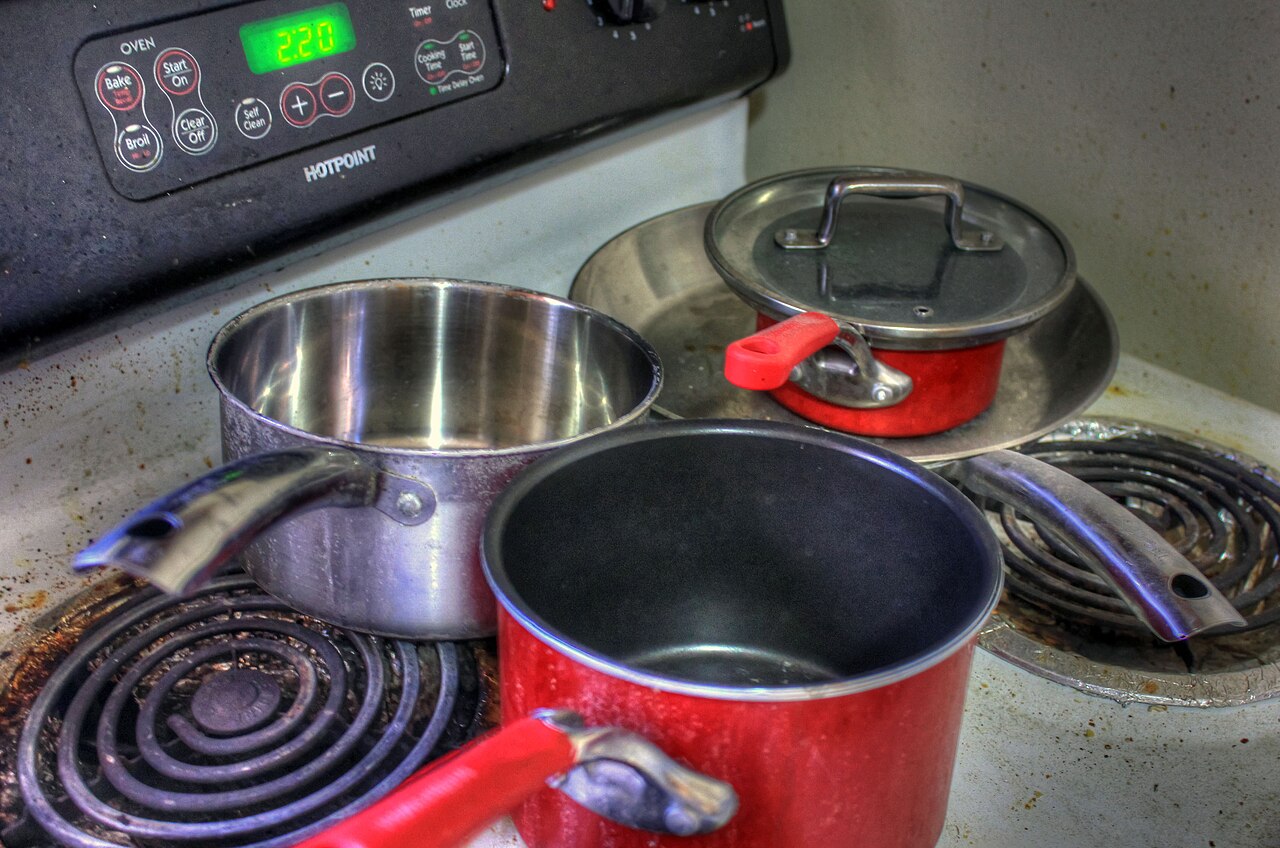
Photo: Pots and pans on an oven. Yinan Chen, November 19, 2013. Public domain · Source. Resized for web.
Check whether the pan can be used again
A usable pot, skillet or baking pan may have more value as cookware than as scrap. Clean it, make sure handles and lids are secure, and offer it through a local reuse shop, donation program or household-goods exchange that confirms it accepts cookware. Do not donate a pan with loose handles, severe warping, flaking nonstick coating or sharp damage.
Keep lids with the matching cookware when donating. A glass lid is not automatically accepted by a metal recycler, so ask about it separately if the pan itself is going for scrap.
Separate metal cookware from ceramics and glass
Most pots and pans are steel, aluminum, cast iron or another metal. Ceramic dishes, glass baking dishes and mixed-material appliances follow different rules. Remove food and grease before using any recycling or reuse route, and separate detachable electrical cords or batteries from powered cookware.
Do not assume the recycling symbol on packaging answers the cookware question. A curbside program may accept metal cans but reject rigid metal objects because of its sorting equipment.
Where local rules differ
New York City: pots and pans go with metal recycling
The New York City Department of Sanitation says residents can recycle all kinds of metal, including pots and pans. Empty, rinsed containers are easier to process, and mostly-metal small appliances can be set out on recycling day after cords and wires are removed.
Use the collection setup for your building and check the New York City pickup guide before set-out. Dishes, cups, mugs, mirrors and drinking glasses are not covered by the pots-and-pans rule.
Boston: keep cookware out of curbside recycling
Boston lists pots and pans as scrap metal that can damage sorting machines. Its recycling guide directs residents to a local scrap-metal recycler instead of the blue recycling container.
Boston also lists pots and pans among the small household items accepted at Zero Waste Days. Those events are for Boston residents, require proof of residency and accept materials only during the scheduled event. Check the current event page before loading a vehicle. See the Boston pickup guide for the curbside schedule.
Philadelphia: not in the recycling bin
Philadelphia’s official recycling list places pots, pans and ceramics in the “keep out of the bin” list. The city notes that its sanitation convenience centers and special-item resources handle some materials that curbside collection does not, but the accepted list must be checked for the particular center and item.
Use the Philadelphia pickup guide for collection details. Do not put cookware in the curbside bin simply because it is metal: Philadelphia’s accepted curbside metals list is narrower and names cans, empty paint and aerosol cans, trays, lids and caps.
How to choose a disposal route
- Reuse first when safe. Clean usable cookware and confirm a donation or exchange program will take it.
- Identify the material. Metal, glass, ceramic and electrical cookware may need different destinations.
- Read the local accepted list. Search for “pots and pans,” “cookware” and “scrap metal.”
- Confirm drop-off terms. Ask whether residency proof, an appointment, weight limits or a fee applies.
- Keep hazardous parts separate. Remove batteries from powered cookware and use the local battery or e-waste route.
If an official page only says “scrap metal,” call the listed facility before traveling. A transfer station may accept large scrap but not household cookware, or may charge by weight.
What this guide does not cover
This page covers household cookware. Commercial kitchen equipment, propane burners, electric hot plates and appliances with batteries or refrigerants may fall under business, e-waste or hazardous-material rules. It also does not treat a local scrap-metal buyer as a guaranteed free drop-off.