How to dispose of fireplace ashes: let them cool for four days where the fire burned, scoop them into a metal container with a tight metal lid, and keep it outdoors away from the house for about another week. Only then, when a stir turns up no heat, do they go in the trash, if your city allows it, or into a garden bed. Hot ashes never go in a plastic bin, paper bag or cart.
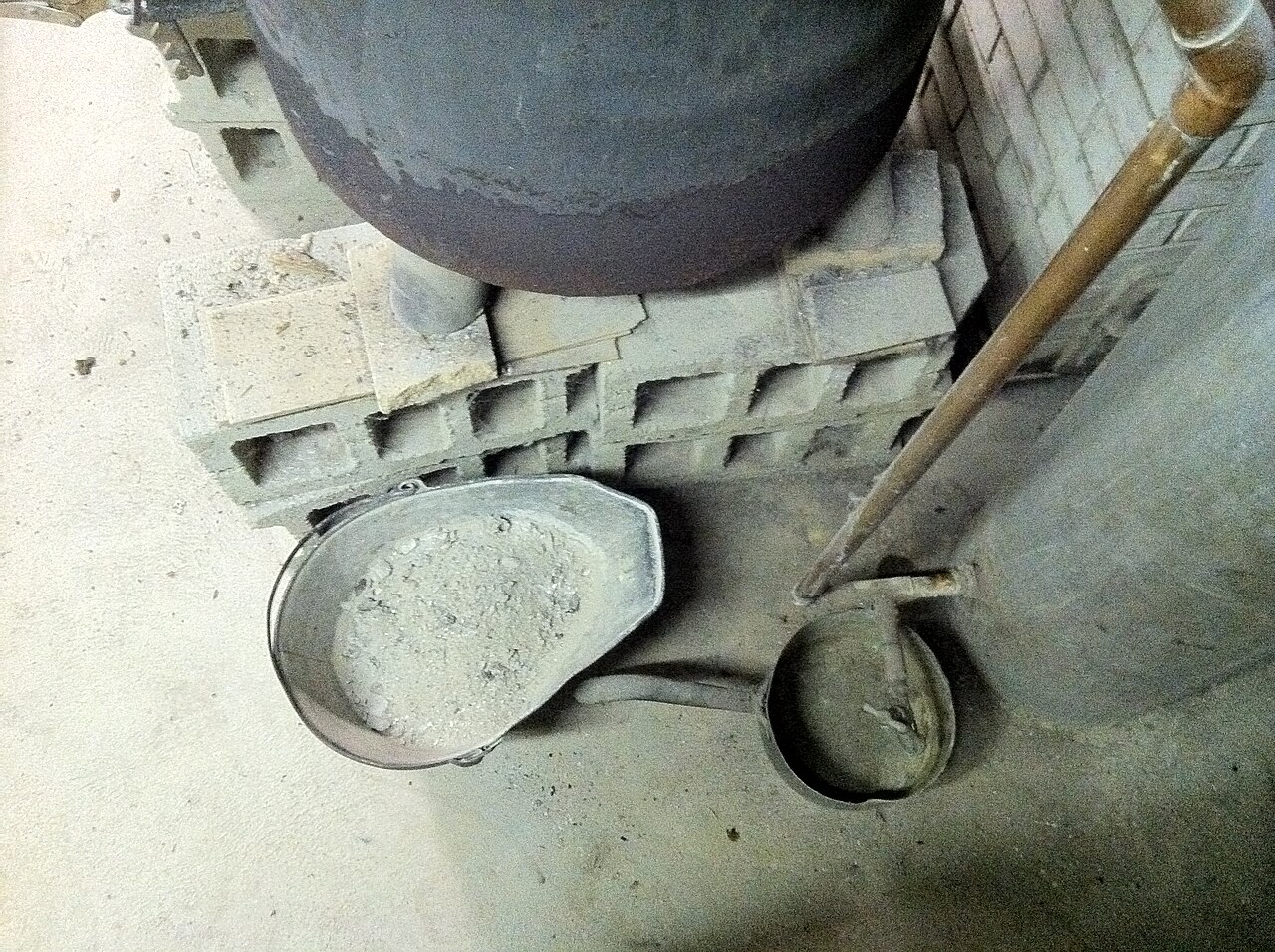
Photo: A metal ash bucket and shovel beside a wood stove. Noah Sussman, 2011-02-21. CC BY 2.0 · Source. Resized for web.
What is true everywhere
- Ash hides heat. The Crystal Lakes Fire Protection District in Colorado says ash acts as an insulator, so coals buried in it can stay hot for a long time without burning out, hot enough to ignite nearby material or melt through plastic, and tells residents to treat all ashes as hot. Boise Fire says coals and ashes can stay hot enough to reignite for many days.
- The container is metal, with a metal lid. Fairfax County Fire and Rescue in Virginia says to use a heavy metal container, moisten the ashes and cover it with a metal lid. It says never to use a paper bag, a cardboard box or a plastic trash bag, and never a vacuum cleaner to pick up ashes.
- The container sits outside. Boise Fire says to keep the metal can outdoors at least 10 feet from the house, other buildings and anything that burns. Fairfax calls a garage, a house or a deck a dangerous place to let ashes cool.
- The season is the reason to learn this now. Montgomery County Fire and Rescue in Maryland says half of home heating fires are reported in December, January and February. Fairfax’s brochure says fireplaces start more than 14,000 fires a year.
What six fire-safety sources tell you to do
| Source | Cool in place first | Container and place | Wait before dumping |
|---|---|---|---|
| Boise Fire, Idaho | Four days recommended | Soak and stir; tightly covered metal container, outdoors, 10 feet from buildings | At least one week |
| Crystal Lakes Fire Protection District, Colorado | At least four days in the stove, fireplace, grill or fire pit | Metal or earthenware container with an air-tight, non-flammable lid, 10 feet from combustibles | At least a week, then stir and check for heat |
| Fairfax County Fire and Rescue, Virginia | At least four days before any dumping | Heavy metal container, moistened ashes, metal lid, outdoors | Not given beyond the four days |
| City of Spokane, Washington | Several days in the grill or wood stove | Metal container, wet down, outside and away from the home | Not given |
| Kearney Fire Department, Nebraska | Not given | Metal container away from combustibles, a little water, stirred now and then | Until a hand held over the ashes feels no heat |
| Montgomery County Fire and Rescue, Maryland | Until cool | Metal container a safe distance from the home | Not given |
The sources agree on the container and the distance. They differ on the clock, and only Boise and Crystal Lakes give a week for the can itself.
How long that takes: a worked example
Suppose the last fire in your stove goes out on Sunday, November 29, and your trash is picked up on Tuesdays.
- Four days in the stove or fireplace ends on Thursday, December 3. That is the day to move the ashes into the metal can.
- Read Crystal Lakes’ wording as four days plus a week in the can and the earliest dump day is Thursday, December 10, so the first Tuesday you can use is December 15.
- Read Boise’s wording as one week in total and the ashes are ready on Sunday, December 6, so the first Tuesday is December 8.
The first count adds a week of waiting and is the safer one if you are unsure. Whichever you choose, stir the can and hold the back of your hand over the whole surface before the lid comes off for the last time.
Where it turns local
Your city decides whether even cold ashes may go in the cart. Two cities with pages on this site, and a few that do not have one, show the range:
| City | What its own pages say |
|---|---|
| Denver, Colorado | The Department of Transportation and Infrastructure’s collection rules list “hot ashes” among the items that are not collectible. The same rules define trash as including ashes, so cooled ashes are ordinary trash. |
| Phoenix, Arizona | Public Works says hot coals should never go in the trash. It counted 12 trash truck fires in Phoenix in 2024 and ties such fires to hazardous items like paint, batteries, electronics and pressurized canisters. |
| Spokane, Washington | The city’s July 2022 release says to treat all coals and ashes as hot, because even cool to the touch they can hold enough heat in their cores to start a fire. |
| Kearney, Nebraska | The fire department says to stir the cooled ashes and then pour them into the city’s plastic container, and that the city charges you to replace a container ashes destroy. |
| Fairbanks, Alaska | The city asks residents to keep ashes out of normal trash bags, charges $100 on the garbage bill for a violation and offers a free separate pickup through Public Works at (907) 459-6770. A line in the same page’s rules table says to bag cold ashes in plastic, so call before you set them out. |
| Boise, Idaho | Boise Fire hands out one free metal Hot Ash Can per household at City Hall West, 333 N. Mark Stall Place, Monday to Friday, 9 a.m. to 4 p.m., while supplies last. Bring proof of residence in its service area; call 208-570-6500 first. |
Denver: cooled ashes are trash, hot ones are not collectible
Denver collection is run by the Department of Transportation and Infrastructure. Its rules list hot ashes with oil, liquids and hazardous waste as materials a crew will not take. Because the same rules count ashes as trash, cooled ashes fall under the ordinary trash rules for the cart.
Phoenix: no hot coals, and a hazardous-waste program for the rest
Phoenix Public Works names hot coals with pool chemicals and tiki torch canisters as things that should never go in the trash. Its release sends residents to the Household Hazardous Waste Collection program for hazardous items, which lets them set an appointment for Public Works crews to collect from the doorstep; the release does not mention ashes.
How to find your local answer
- Cool and can the ashes as above, then stir them. If you feel any warmth with the back of your hand held over the surface, wait longer.
- Open your city page from States & Cities and read its trash cart rules and its list of materials with their own rules. If your hauler publishes a “do not put in the cart” list, look for ashes and coals on it.
- If the city says nothing about ashes, call the number on its collection page and ask whether cooled ashes may go in the cart and whether they must be bagged.
- If trash is not an option, the Fairfax brochure names garden and flower beds as good places for cooled ashes. Clear dry leaves from the spot, keep it away from the house, moisten the ashes and avoid wooded areas.
What this is not
- Not cremated remains. This guide covers ash and coals from fireplaces, wood stoves, fire pits and grills.
- Not a burn pile. The rules for burning leaves and brush are a separate question; see how to dispose of leaves.
- Not other things that start truck fires. Batteries, propane and chemicals have their own routes: lithium-ion batteries, aerosol cans and propane tanks and pool chemicals.