A curbside compost pilot tests food-scrap pickup on a limited number of streets, for a set time, before a city decides whether to run a full program. Two cities that piloted curbside composting in 2026 show how differently that decision can go: Honolulu turned its six-neighborhood pilot into an islandwide program, while Chattanooga ended curbside pickup and moved residents to free drop-off kiosks instead.
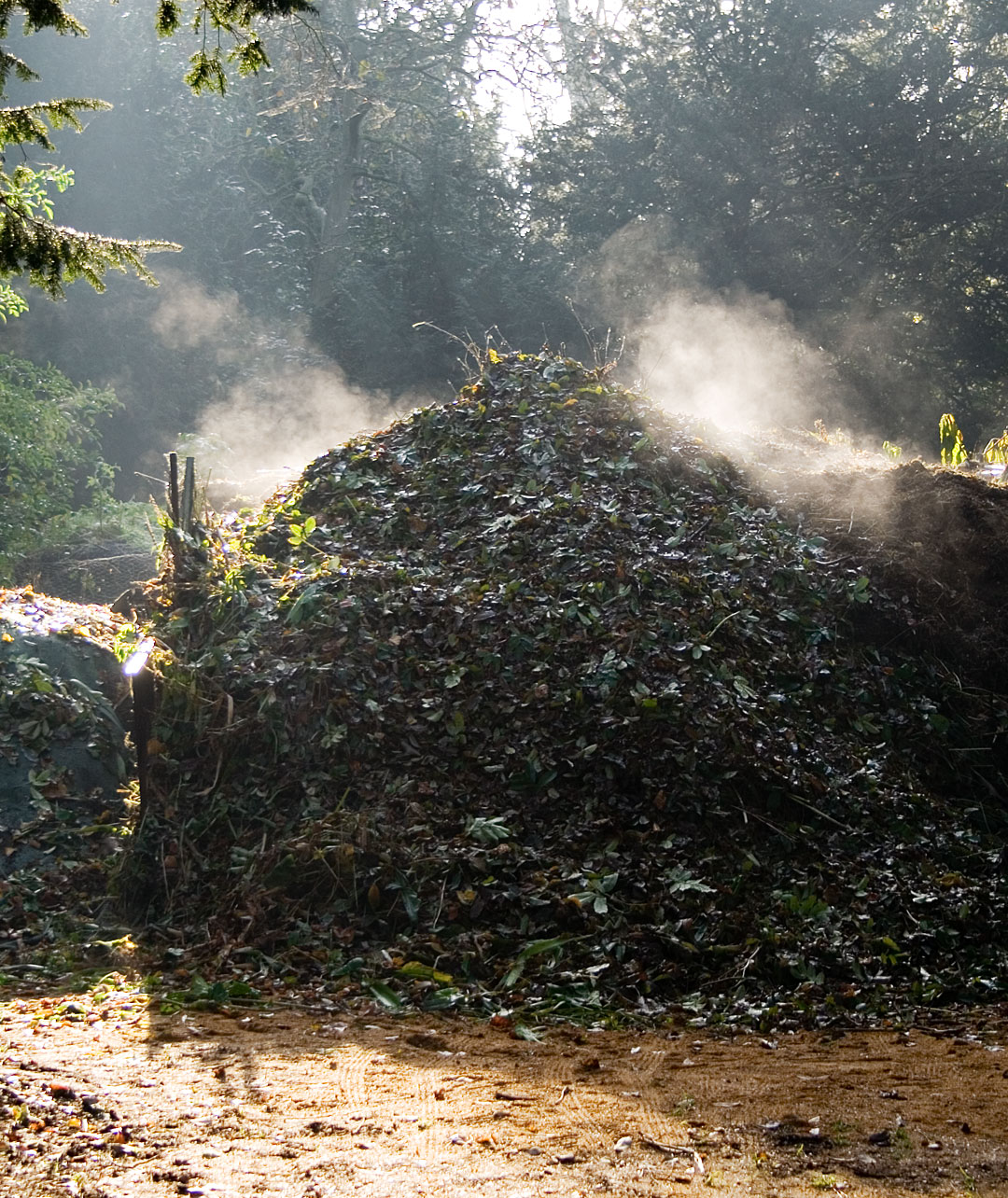
Context photo: A backyard compost heap steaming in cold morning air — the same material a curbside pilot’s cart collects instead of a backyard pile. Andrew Dunn, 2005-11-19. CC BY-SA 2.0 · Source. Resized for web.
What counts as a pilot, and what doesn’t
A pilot covers part of a city, runs for a stated length of time, and is checked against a goal before it expands, continues or stops. Bedford, Massachusetts ran its curbside organics pilot for six months with 477 households, about 10% of the town’s curbside service area, and published a final report on the result (Town of Bedford, 2025 Curbside Organics Pilot Final Report). A full program, by contrast, has no end date and is open to every address the city serves, or names an ongoing expansion schedule.
Two things do not make a program: a press release calling something a “program,” or a pilot that has run for years without a decision either way. Check whether the city’s own page still uses the word “pilot” and whether it names a service area smaller than the whole city.
Which cities piloted curbside composting in 2026
Honolulu, Hawaii. The City and County of Honolulu’s G.R.O.W. (Green Recycling Organic Waste) pilot started April 1, 2026, letting homes with automated cart collection in six neighborhoods — Hawaiʻi Kai, Kailua, Kalihi, Mililani, Nānākuli and Waipahu — add food scraps to the green compost cart (Honolulu G.R.O.W. program page; see Trashbagging’s report on the pilot’s launch). The city expanded the program islandwide on October 1, 2026, to every address with three-cart automated curbside collection, on the same schedule and at no added cost (Hawaiʻi Public Radio, September 30, 2026; Hawaii News Now, September 30, 2026). See Hawaii trash pickup and Honolulu trash pickup.
Chattanooga, Tennessee. The city launched two curbside pilots on October 1, 2025: NewTerra Compost handling food scraps, Overlooked Materials handling glass, starting in the Belvoir and Brainerd neighborhoods and expanding that December to Missionary Ridge, Ridgedale and Highland Park (City of Chattanooga news release; WDEF). The food-scrap pilot diverted 97,746.96 pounds of material before its grant funding, an Organics Management Grant from the Tennessee Department of Environment and Conservation, ran out (NewsChannel9; BioCycle, August 11, 2026). Curbside collection stopped on June 30, 2026; the glass pilot, run separately, kept its own curbside pickup (NewsChannel9). See Tennessee trash pickup.
Somerville, Massachusetts. The city opened applications on October 24, 2025 for a curbside food-waste pilot in East Somerville, capped at 1,200 households in buildings of six units or fewer that are not already enrolled in a paid composting service (City of Somerville news release; WBZ NewsRadio). Enrolled households get a free countertop pail and curbside bin, with pickup on the regular collection day, through mid-2027. See Massachusetts trash pickup.
How to find out if your address is in a pilot’s service area
A pilot’s service area is never the whole city, so start on the city’s own composting or solid-waste page rather than guessing from a neighbor’s cart or a news story about a different part of town:
- Look for a named list of neighborhoods or a map, the way Chattanooga named its zones and Honolulu named its six pilot communities.
- Look for an address-lookup or application tool. Somerville runs eligibility through its own site rather than a neighborhood list.
- Check whether the city mailed current pilot households a notice, as Honolulu’s environmental-services department did before launch; if you did not receive one and the city used that method, you are likely outside the area.
- If the page still says “pilot” and gives a specific area, do not assume a nearby address is included, even one block over.
What changes once a pilot becomes a permanent program — or doesn’t
A pilot does not automatically turn into standing curbside service. Honolulu’s pilot became a bigger version of itself: same schedule, same cart, same no-cost rule, now open island-wide. Chattanooga’s pilot became something else entirely: curbside pickup ended when its grant ran out, and the free continuation is a drop-off kiosk at one of the city’s recycling centers, not a cart at the curb; a resident who wants curbside pickup now pays a private hauler for it. Somerville’s pilot has not yet reached a decision; it runs on a fixed household cap through a stated end date, and a household that misses the cap can buy a paid subscription in the meantime.
Before counting on a pilot becoming a free, permanent part of your own trash and recycling schedule, check the city’s own page for a stated end date, a waitlist, or a “program” (not “pilot”) label.
What this is not
A running pilot in one city is not evidence that a neighboring city has one or is about to start one. A pilot ending is not evidence the city abandoned composting; Chattanooga kept offering compost drop-off, just not at the curb. A “composting program” mentioned in a press release is not the same as a bin at your curb until the city’s own page says your address is covered.
If your city has no pilot at all
See How to dispose of food scraps for backyard composting, worm bins and how to find an existing municipal or commercial drop-off site, none of which require a pilot to exist.