If you need to know how to dispose of a water heater, the answer depends on your city’s bulk rules more than on the tank. A standard tank heater has no refrigerant, so most city programs treat it like a stove or a washer: a scheduled bulk pickup, a large-item set-out with metal recycling, or a drop-off. Some cities do not collect one at all, and a heat pump model needs one extra question.
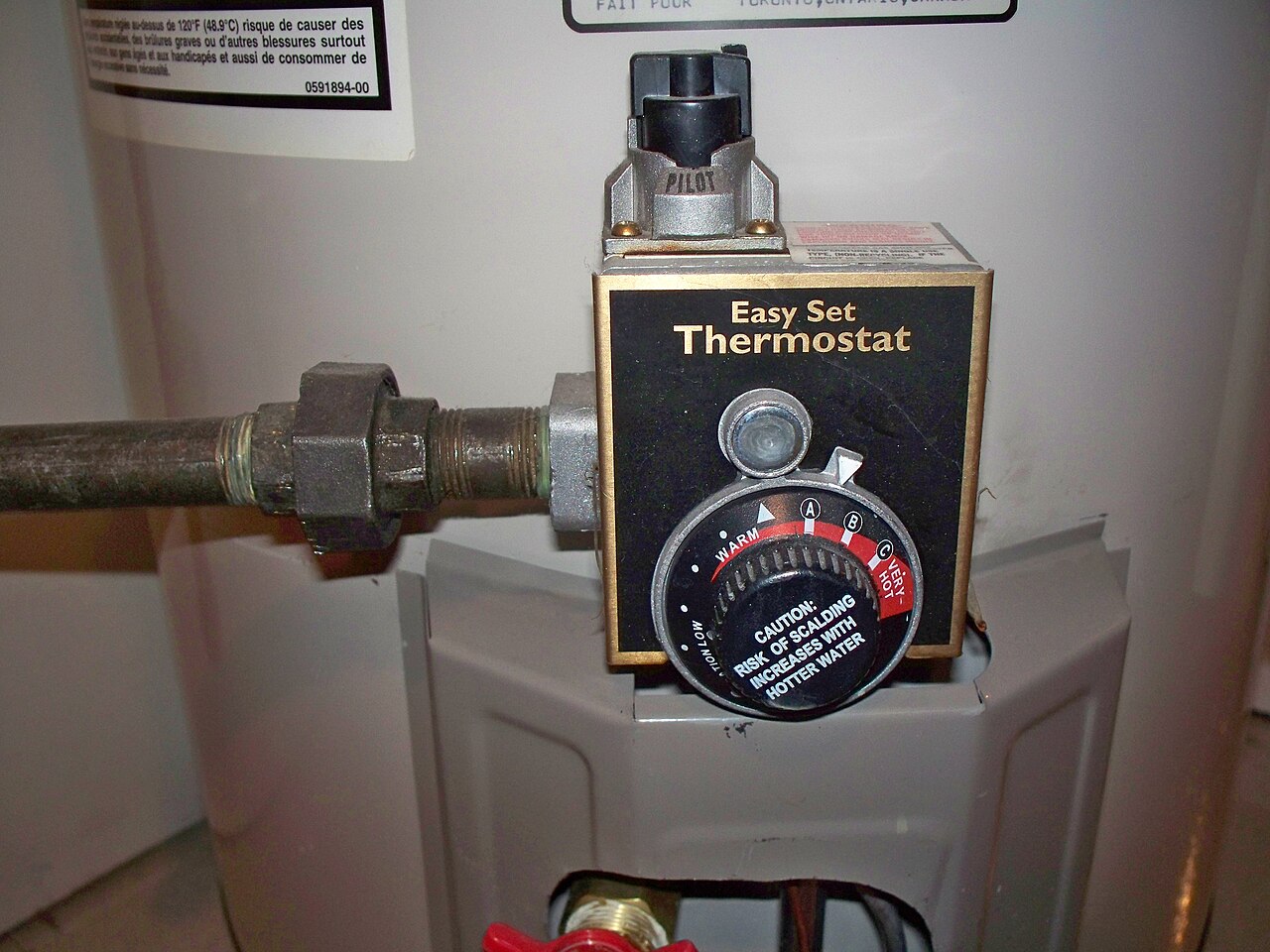
Photo: Gas control valve and temperature dial on a tank-style home water heater. Jason Woodhead, 2008-01-01. CC BY 2.0 · Source. Resized for web.
Five cities, five different answers
The same tank leaves the house five different ways in the five cities below. Each row comes from the city’s own collection pages.
| City | Does the city take it? | How | Limit or timing |
|---|---|---|---|
| New York City | Yes, free | Large item at the curb with your metal and plastic recycling; no appointment | Up to 6 large items per collection day; out between 6 p.m. and midnight the night before |
| Philadelphia | Yes, free | Bulk Collection appointment, or carry it to a Sanitation Convenience Center | 4 items per appointment, one appointment per household a week; 2 metal items a day at a center |
| Houston | Yes, free | Heavy trash pile on your junk waste day, or a Residential Drop-Off Center | Even-numbered months only; pile up to 8 cubic yards |
| Charlotte | Yes | Scheduled bulky item collection through 311, the CLT+ app or online | At the curb by 6 a.m. on the scheduled day; unscheduled items stay |
| Boston | No | Donate it or hire a private hauler | Not on the City’s special collection list |
Two things decide the route in every city: whether the item is mostly metal, and whether the city lets it go out on a regular day or only by appointment. A water heater is mostly steel, which is why New York sends it out with recycling and Charlotte lists it among the recyclable bulky items.
A worked example: Houston, Thanksgiving week
Say a Houston homeowner has the old tank pulled on Friday, November 20, 2026. November is not a heavy trash month: Houston collects heavy trash only in February, April, June, August, October and December. The tank can wait for the December junk waste day on the address’s assigned schedule, set out no earlier than 6 p.m. the Friday before and by 7 a.m. on the day.
The faster route is a Residential Drop-Off Center, which the City offers between heavy trash months with proof of address. Those centers close on Thanksgiving, Thursday, November 26, and on Friday, November 27, and reopen Saturday, November 28, under the City’s November 2 holiday schedule. So that tank goes out either the week of November 23 before the holiday, on November 28 or later, or in December at the curb.
Before the tank leaves the house
- If you are buying a new heater, ask the installer before the job whether hauling the old one away is included.
- Have the gas or power shut off and the tank disconnected before it is moved. A city crew collects the tank, not the connection.
- Drain the tank before you move it; water left inside adds a lot of weight.
- Check the label. A heat pump water heater moves heat with a refrigerant loop, as the U.S. Department of Energy explains, so it is not a plain steel tank. Houston, for example, refuses appliances that contain coolant unless a certified technician has removed the refrigerant and tagged the unit. Ask your city before setting one out.
Where state law steps in
North Carolina bans white goods from its landfills, and its statute names water heaters as white goods (G.S. 130A-290 and G.S. 130A-309.10). The state also charges a $3 tax on each new white good sold (G.S. 105-187.21). That is why a Charlotte tank goes to bulky collection as a recyclable item and never into the garbage cart. See the North Carolina hub for the state’s other rules.
How to find your local answer
Look up “water heater” or “appliances” in your city’s or county’s A-to-Z waste guide, not “trash.” If the city lists it under bulk or appliance collection, check three things: whether you need an appointment, how many items one pickup takes, and whether the item goes out on your trash day or your recycling day. If your building is too large for city service, the property manager or the building’s hauler handles it. Your city page and the bulk pickup rules by city are the quickest way in.
A scrap metal yard is the other common route. Call first: yards set their own rules on what they take and whether they pay.
What this is not
A water heater is not a refrigerator. Fridges, freezers and air conditioners carry refrigerant and follow their own rules in every city on this page; see how to dispose of a refrigerator or freezer. The pipes and fittings removed with a heater are a separate question too: Boston lists plumbing fixtures with water heaters as donate-or-hauler items, and Houston’s heavy trash program refuses debris a contractor produced.