If you are trying to learn how to dispose of e-bike and scooter batteries, keep the pack out of every curbside trash and recycling cart. These high-energy lithium-ion batteries need a battery recycler, a household hazardous-waste program, or another collection point that explicitly accepts large mobility batteries.
Quick answer
- Leave the battery intact and keep it away from heat, water, and metal objects.
- Check the manufacturer or retailer for a take-back option.
- Search your city or county household hazardous-waste program for “e-bike battery,” “scooter battery,” or “large lithium-ion battery.”
- Before transport, cover exposed terminals with non-conductive tape or place the battery in its own plastic bag.
- If the pack is swollen, leaking, hot, smoking, damaged, or recalled, do not handle it like an ordinary used battery. Move away from it, call 911 for an active fire, and ask the manufacturer or local fire department for safe next steps.
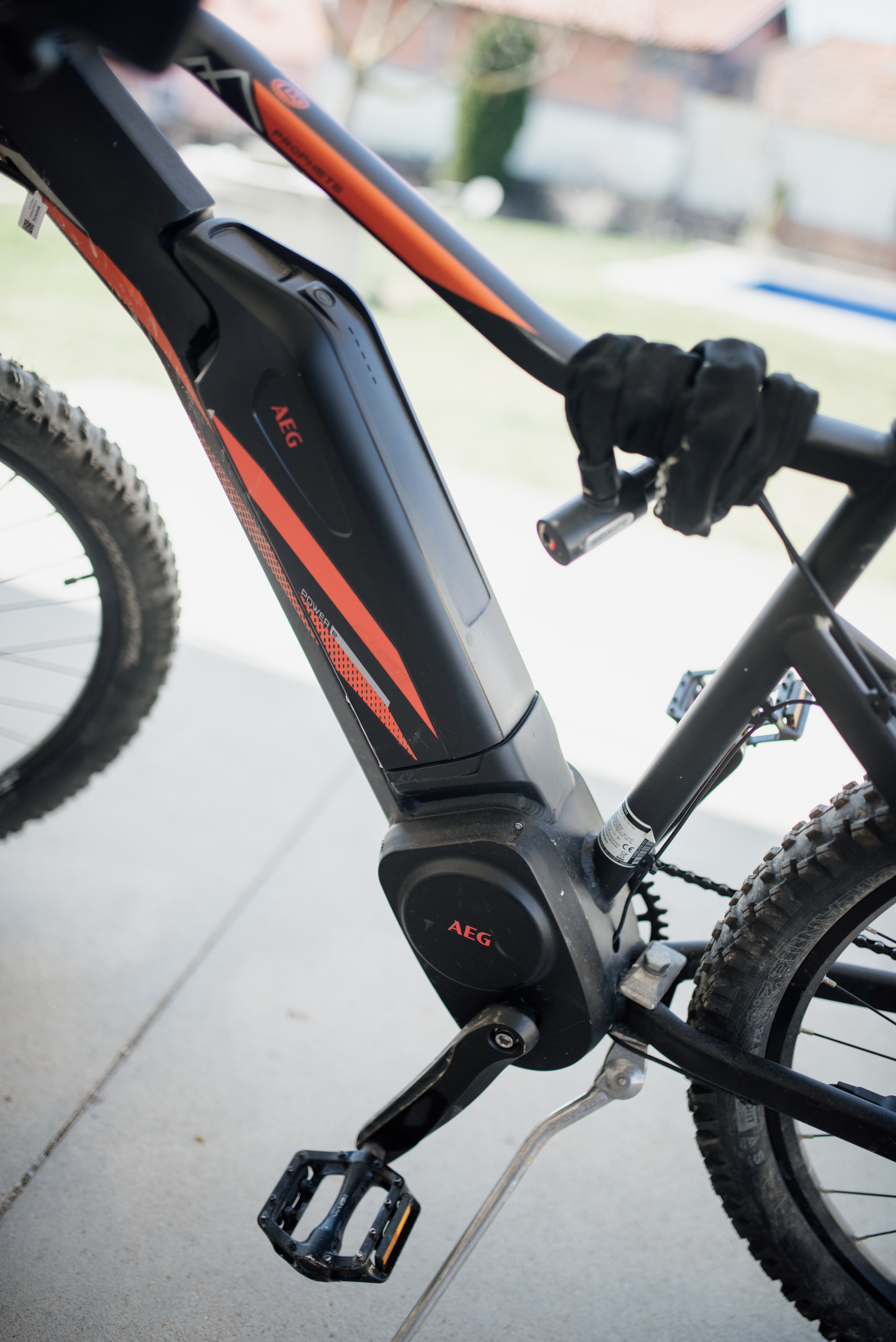
Photo: Removable electric bicycle battery on a frame. Nenad Stojkovic, March 20, 2022. CC BY 2.0 · Source. Resized for web.
Why these batteries do not belong in a cart
E-bikes and electric scooters commonly use rechargeable lithium-ion packs. A pack can be crushed or punctured by collection equipment, compactors, or sorting machinery. That damage can start a fire in a truck or facility.
The US Environmental Protection Agency says lithium-ion batteries should not go in household trash or municipal recycling bins. It directs households to a battery recycler or a local household hazardous-waste program. EPA also advises taping terminals with non-conductive tape or placing each battery in a separate plastic bag before taking it to a collection point.
Do not dismantle the pack to separate its cells. The housing, wiring, and battery-management electronics are part of a system designed to contain the cells. Opening it creates new short-circuit and exposure risks.
Intact, damaged, and recalled packs need different handling
An intact battery that no longer holds a useful charge can usually follow a retailer take-back, battery-recycling, or household hazardous-waste route. Confirm the location accepts the battery’s size and chemistry before leaving home; some drop-off programs accept loose household batteries but exclude large propulsion packs.
Treat a battery as damaged if it is swollen, cracked, leaking, unusually hot, smells strange, hisses, or has been involved in a crash or water exposure. Stop charging and using it. Keep people and combustible materials away. EPA advises contacting the manufacturer for handling instructions when a lithium-ion battery becomes damaged.
For a recall, follow the manufacturer’s or the US Consumer Product Safety Commission’s instructions. A recalled battery may require specific packaging, shipping, or retailer return steps that a general battery bin cannot provide.
Where it turns local
Seattle
Seattle Public Utilities’ special-item pickup page says e-bike and e-scooter batteries are not eligible for that curbside pickup service. The city’s battery and electronics disposal guide instead points residents to the North or South household hazardous-waste facility, the North or South transfer station, or a participating battery recycler. Damaged or defective batteries belong at a household hazardous-waste facility.
The practical point is that a scheduled appliance or electronics pickup is not automatically a mobility-battery pickup. Before travelling, describe the complete pack and ask whether the site accepts its size and condition.
New York City
The New York City Department of Sanitation says rechargeable batteries, including e-bike and scooter batteries, may not go in trash or recycling. Stores that sell rechargeable batteries must accept them for recycling under the city’s program, and residents can also use DSNY Special Waste Drop-Off Sites or SAFE disposal events.
Call the store before bringing a large pack. A retailer may need to direct you to a staffed counter rather than a small collection box.
Austin
Austin Resource Recovery says batteries stay out of every curbside cart. Its battery recycling guidance says curbside customers can schedule up to three household hazardous-waste collections a year by appointment. The page does not explicitly say whether a complete e-bike or scooter pack fits that program, so describe the pack when booking and confirm the acceptance rule before setting it out.
How to find your local answer
Start with your city or county solid-waste department, then the local household hazardous-waste program. Search for the exact battery type, not just “electronics.” Useful questions are:
- Do you accept a complete e-bike or e-scooter lithium-ion pack?
- Is there a weight, watt-hour, or damage limit?
- Is an appointment required?
- Does the battery need to be discharged, taped, or individually bagged?
- Where should a damaged or recalled pack go?
- May a resident use the site, or is it restricted by address?
A retailer or manufacturer take-back program can be the best route when the pack is proprietary. Keep the model and serial number handy when you call.
What this guide does not cover
This is disposal guidance for household e-bike and scooter batteries. It does not cover commercial fleets, bulk battery shipments, damaged-battery transport by mail or common carrier, or fire response. Shipping lithium batteries is regulated and may require special packaging and documentation; do not improvise a shipment from household instructions.
Questions about e-bike and scooter batteries
Can an e-bike battery go in household trash? No. EPA says lithium-ion batteries should go to a battery recycler or household hazardous-waste program.
Can it go in the curbside recycling bin? No. A municipal recycling cart is not a battery collection program.
Should I remove the battery from the bike or scooter? Remove it only if the manufacturer designed it to be removable and it is safe to handle; otherwise ask the manufacturer or collection site about the complete device.
What should I do with the terminals? For an intact used pack, cover exposed terminals with non-conductive tape or place the battery in its own plastic bag before transport.
What if the battery is swollen or hot? Stop using and charging it, move away from it, keep combustible material clear, and call 911 if it is smoking or on fire. Ask the manufacturer or local fire department for handling directions.
Will a hardware store accept it? Some retailers accept rechargeable batteries, but large mobility packs may be excluded. Call and describe the battery before travelling.