
How to dispose of a fire extinguisher comes down to one fact: it is a pressurized container, so a charged one never goes in a trash or recycling cart. No federal rule tells a household what to do with it. Your city decides, and the answers range from a free hazardous waste drop-off in Knoxville to a fire-equipment business or an emptied, headless shell at a scrap yard in Denver.
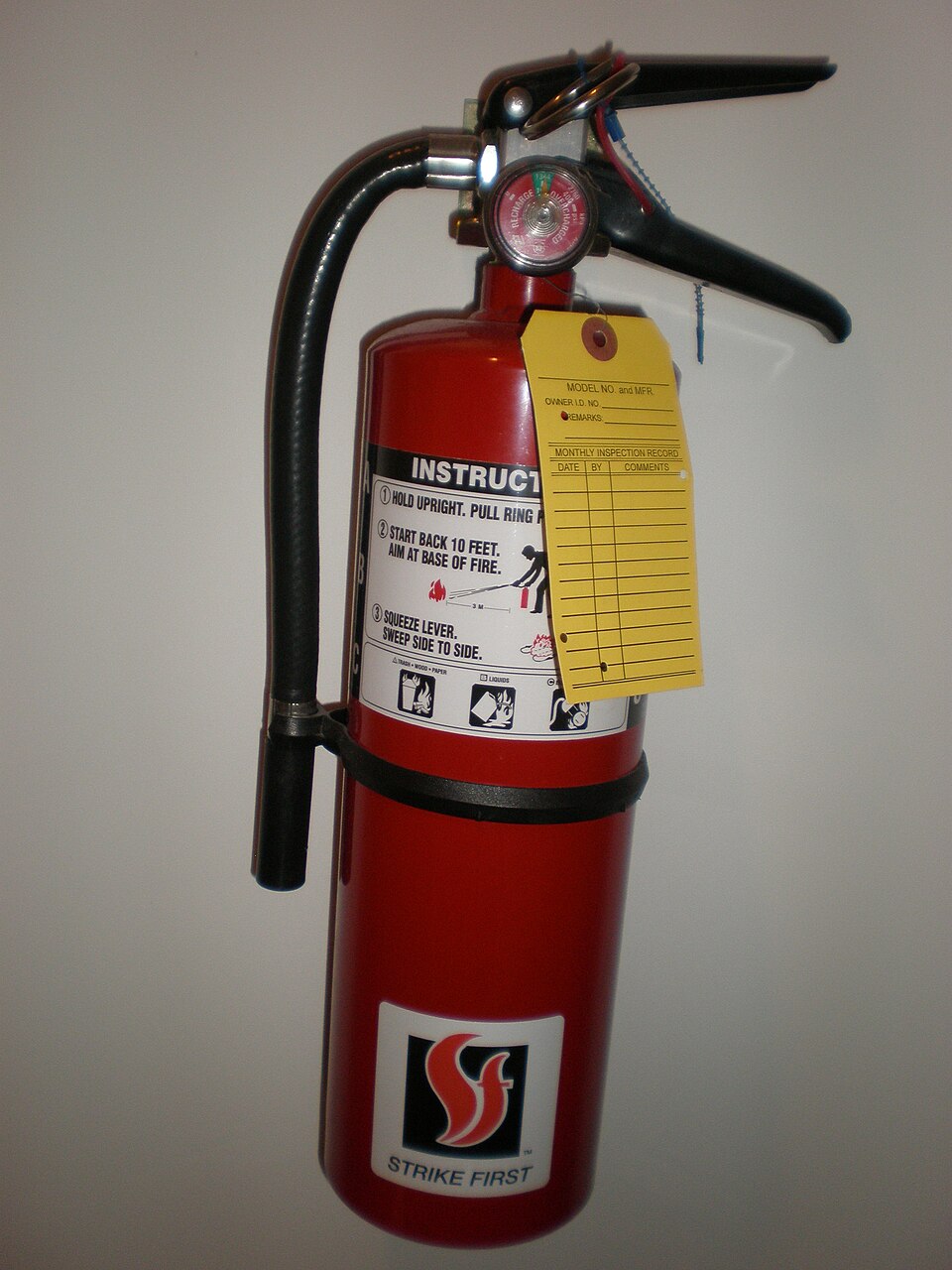
Photo: A Strike First fire extinguisher. BrokenSphere, 2008-06-04. CC BY-SA 3.0 · Source. Resized for web.
Before you get rid of one, check whether it only needs service. Rechargeable extinguishers, usually the heavier metal ones, can be refilled; disposable ones cannot. Denver’s guidance puts it simply: disposables are typically red plastic or aluminum, while larger rechargeable models are usually brass or steel.
What is true everywhere
- No federal household rule. The US EPA says waste from normal household activities is excluded from the federal hazardous waste rules under the Resource Conservation and Recovery Act, though state and local rules can be stricter. That is why the answer for a household extinguisher is local.
- The EPA’s advice is to ask locally. EPA points residents to their local environmental, health or solid waste agency for permanent or periodic household hazardous waste collection.
- Pressure is the danger. Denver’s hazardous waste guidance warns that extinguishers are pressurized and hold corrosive or hazardous chemicals, so they can explode in a trash truck. Never put a charged one in the trash or recycling.
Where it turns local
Knoxville: free at the hazardous waste facility
- In Knoxville, Tennessee, fire extinguishers are on the accepted list at the Knoxville Household Hazardous Waste Facility, 1033 Elm Street, off the I-275 Baxter exit.
- Drop-off is free for residents. The facility is open Monday, Tuesday, Thursday and Friday 7 a.m. to 3:45 p.m., Wednesday 7 a.m. to 11:45 a.m. and Saturday 8 a.m. to 11:45 a.m.; every visitor drives across the scale.
- Residents may bring up to 100 pounds of hazardous materials a day, in containers no larger than 5 gallons. Businesses, nonprofits and churches are turned away and must contract privately.
Denver: a fire-equipment drop-off or an emptied shell
- In Denver, Colorado, the city’s hazardous waste guidance says the easiest and safest option is to drop off an old, charged or empty extinguisher at a specialized facility, and warns that some charge a small fee. It lists Pye-Barker Fire & Safety (formerly Sentry Fire and Safety) at 1294 S. Inca St., Denver, and 4800 W. 60th Ave., Arvada, and Cintas Fire Protection at 3745 E. 50th Ave., Denver; call Cintas at 303-321-0345 to confirm hours and fees.
- For a disposable extinguisher, Denver describes a second route: discharge it outdoors in a well-ventilated area into a sturdy trash bag, wearing eye protection; let it sit a few days and press the handle until the gauge reads zero; remove the head; then take the empty, headless canister to a scrap yard.
- Denver says never to put an extinguisher in a regular trash or recycling bin.
How to find your local answer
- Decide whether the extinguisher can be serviced or refilled rather than thrown out.
- Open your city page from States & Cities and look under hazardous waste, electronics and drop-off sites for a facility that lists fire extinguishers.
- Search the drop-off locations catalog for a household hazardous waste site near you, and check its accepted list before you drive.
- If no public site takes it, ask a fire-equipment service company, as Denver suggests, and expect a fee.
What this is not
- Not a propane tank. Propane cylinders follow their own rules; see aerosol cans and propane tanks.
- Not an aerosol can. A spray can and an extinguisher are both pressurized, but a city that takes empty aerosol cans in recycling is not saying an extinguisher can go there too.
- Not a smoke detector. Smoke detectors are a separate item; Knoxville’s hazardous waste facility refuses them.


