
How to dispose of shredded paper depends on your city more than on the paper. Loose shreds are too small for most sorting lines, so a city either asks you to contain them, sends them to the compost cart or leaves them for the trash. San Francisco takes them in the blue bin only inside a stapled paper bag; Austin composts them; Denver keeps them out of recycling.
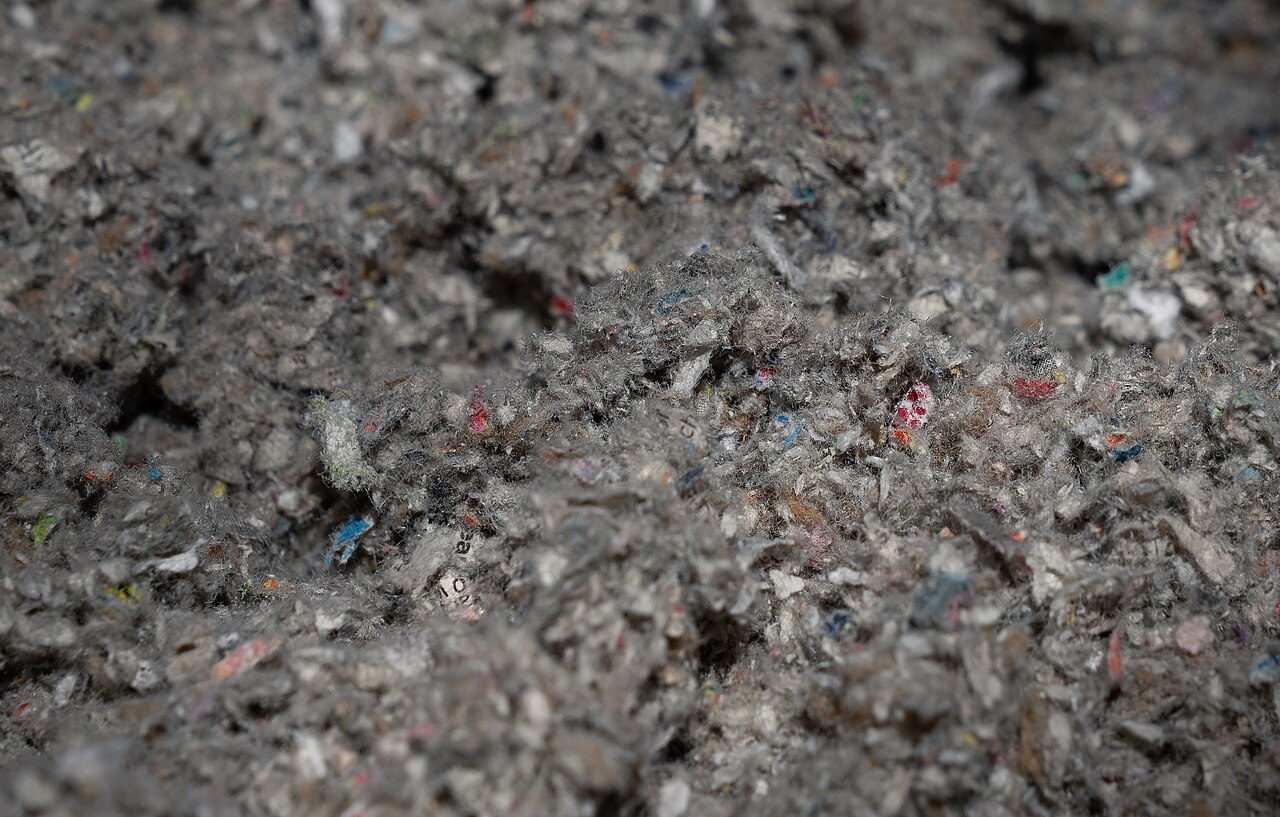
Photo: Shredded post-consumer paper ready for pulping, Minnesota State Fair. Tony Webster, 2018-08-29. CC BY 2.0 · Source. Resized for web.
The paper itself is the same office paper and mail that most recycling programs take whole. Shredding changes its size and shape, and size is what the sorting rules turn on.
What is true everywhere
Recycling carts are emptied onto sorting lines built for whole items. Denver states the rule plainly: an item smaller than the palm of your hand, about 2 inches, is too small to recycle. A strip of shredded paper is far smaller than that, and loose shreds scatter in the truck and at the sorting facility.
That is why no city on the site asks for loose shreds in the recycling cart. The choice it leaves you is between a contained form the city names, a compost cart that accepts paper, and the trash.
Shred only what needs it. Envelopes, letters, office paper and junk mail are accepted whole in the recycling of the cities below; a page with nothing personal on it does not need to become shreds.
Where it turns local
San Francisco: blue bin in a stapled paper bag, or compost
San Francisco, California, lets residents put shredded paper in the blue recycling bin only when it is inside a brown paper bag, stapled shut and labeled “SHREDDED” on the outside. Otherwise SF Environment says shredded paper goes in the green composting bin.
The rule names a brown paper bag, so a plastic bag or a loose pile is not a substitute. Without the bag, the shreds belong in the green bin.
Austin: the green composting cart
Austin, Texas, lists shredded paper among the items accepted in the green curbside composting cart, next to sawdust, toothpicks and untreated wood. The city’s composting guide says paper items can go in dry or wet, directly in the cart or in a paper bag.
Austin’s green cart serves single-family homes and buildings of up to four units on city service. Residents of larger apartment buildings use whatever their private hauler provides.
Denver: not in recycling, not in compost
Denver, Colorado, lists shredded paper among the paper items not accepted in the purple recycling cart, next to paper towels, tissue paper and wrapping paper. Denver’s compost service guide lists paper products among the things to keep out of the green compost cart.
With both carts closed to it, shredded paper in Denver goes in the trash cart, bagged as the city requires for all trash. The same paper unshredded is accepted in recycling as office paper, mail and envelopes.
Seattle: a separate stream on the city’s list
Seattle, Washington, names shredded paper in its Designated Recyclables List adopted January 8, 2026, as recommended for individual collection rather than mixed with other recyclables. Check the city’s Where Does It Go? lookup for the current cart rule before setting it out.
How to find your local answer
- Open your city or county page and its link to the official recycling and compost lists.
- Search the city’s lookup tool for “shredded paper”, not just “paper”; many lists treat it as a separate item.
- If the city allows it in recycling, follow its container rule exactly: paper bag, stapled, labeled.
- If the city has a compost cart that takes paper, check that shredded paper is named; some compost programs refuse paper products.
- If neither cart accepts it, bag it for the trash. Do not put loose shreds in any cart on a guess.
What this is not
Not a rule for whole paper. Mail, office paper and envelopes are recyclable whole in San Francisco, Austin and Denver; shredding is what moves them out of the cart.
Not a rule for greasy or soiled paper. Food-soiled paper follows the compost rules, as with pizza boxes.
Not a rule for plastic. Shredded plastic cards, film and laminated paper are not paper; see plastic recycling numbers.


