
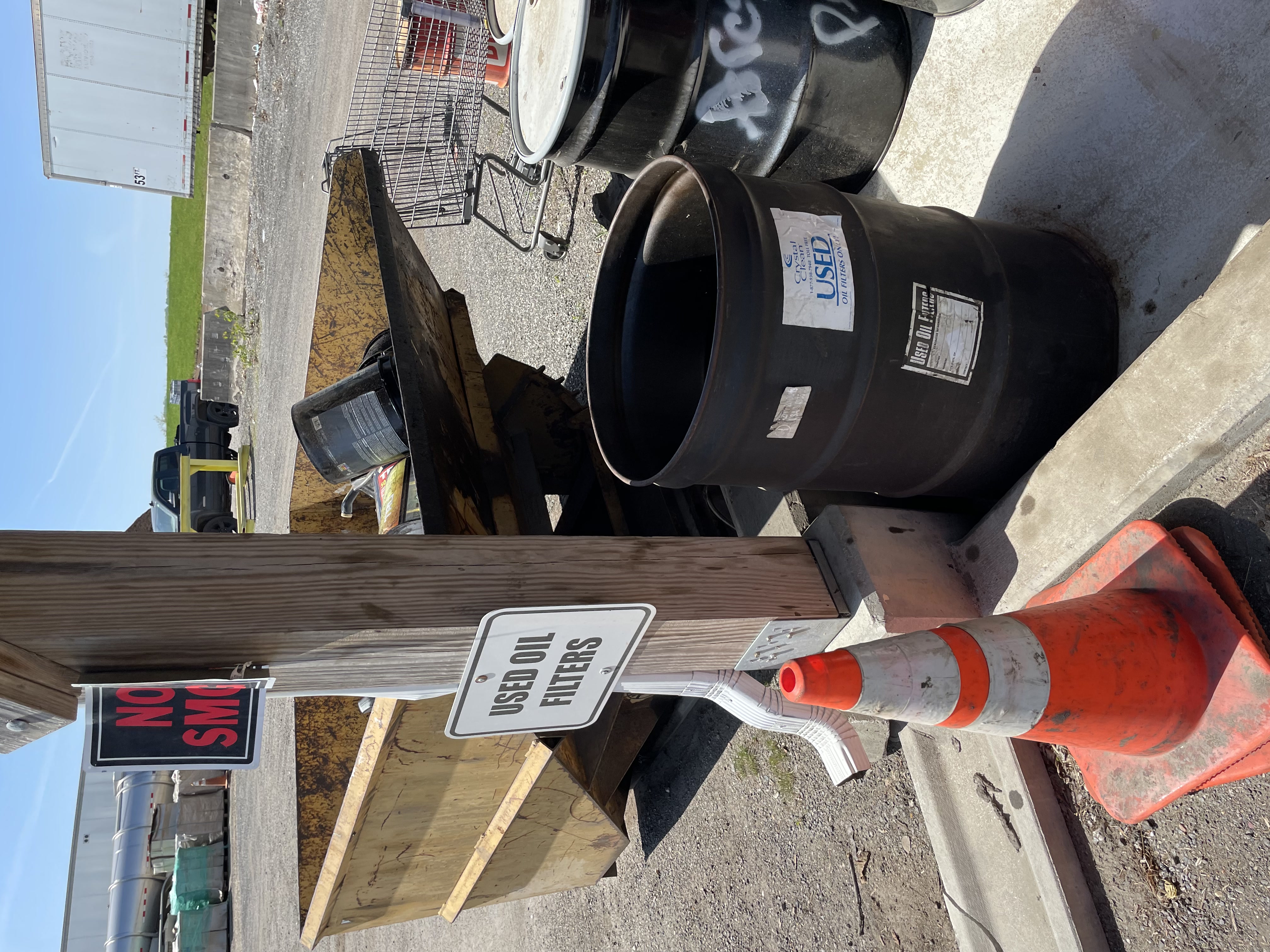
How to dispose of used motor oil depends on the collection service, but the first step is the same: collect it without spills and keep it in a leak-proof container, separate from other fluids. Ask a local recycler, repair shop or hazardous-waste service about acceptance. Used oil filters need their own preparation and acceptance check; an oil collection does not automatically take filters.
Context photo: A used-oil-filter collection barrel at Baltimore County Central Acceptance Facility. Elliott R. Plack, April 20, 2023. CC0 · Source.
A gallon left after a driveway oil change can go back into the recycling system. It should not be combined with a jug of antifreeze or the contents of a solvent can to save a trip. Those mixtures change what a collection service can accept.
What is true everywhere
EPA’s consumer guidance covers petroleum-based and synthetic oil that has already been used. During use, oil picks up contaminants such as dirt, metal particles and water. Used motor oil can be collected and re-refined into lubricating oil, processed into fuel oil or used as a refinery feedstock.
For a household, EPA recommends avoiding spills, using a leak-proof container and asking local vehicle-maintenance businesses, waste collectors or government waste officials where to recycle it. Used oil filters contain recoverable metal, too. The agency says to drain and recycle filters and notes that they can usually go to the same collection center as the oil. “Usually” matters: check the filter policy separately.
Keep oil separate from solvents, pesticides, paint, water and antifreeze. EPA’s used-oil collection guide warns against combining these materials. If your jug already contains another fluid, tell the receiving service exactly what was added before taking it to an ordinary oil-recycling collection.
A shop that sells fresh oil is not automatically a take-back center. EPA states that federal rules do not require motor-oil vendors to accept used oil from other people. State rules may be stricter, and individual shops have their own acceptance conditions. Ask before leaving a container.
EPA’s business FAQ also says that people generating used oil from maintenance of their personal vehicles and equipment are not subject to its federal used-oil management standards. That household distinction does not cancel state, county or collection-service rules. Nor does it mean used oil belongs in the regular garbage.
Where it turns local
Seattle: two sealed one-gallon jugs on collection day
For Seattle Public Utilities customers in Seattle, Washington, the utility lists free collection of used cooking oil and used motor oil. It says no special pickup request is needed for these oils.
Set out sealed jugs with your address written on them on your regular collection day. The limit is two one-gallon sealed jugs, and the utility says no mixed oil. Keep cooking oil and motor oil apart rather than combining them into one container.
That allowance describes oil in jugs. It is not a promise to take oil filters alongside the jugs. For filters, ask the utility about a separate route or use a collection facility whose accepted-materials list names them. If you live in an apartment building, coordinate the set-out location with the person managing its waste service.
A local hazardous-waste option is the North Seattle Hazardous Waste Facility, 12550 Stone Avenue North. King County’s household brochure lists motor oil as accepted and gives its hours as Sunday through Tuesday, 9 a.m. to 5 p.m. The program serves King County households without an appointment or fee; quantity limits still apply.
King County: separate hazardous-waste collection
In King County, the Solid Waste Division says transfer stations do not accept petroleum products such as motor oil, even in household quantities. Its recommended alternatives are household hazardous-waste facilities or participating repair shops, automotive supply stores and gas stations.
The distinction matters at a facility with several services. Factoria’s hazardous-waste collection operates at the transfer-station site, at 13800 SE 32nd Street in Bellevue; it is not permission to unload oil with ordinary garbage. The county’s household brochure gives hazardous-waste hours as Tuesday through Friday, 8 a.m. to 4 p.m., and Saturday and Sunday, 9 a.m. to 5 p.m.
Residents can recycle used oil and filters through household hazardous-waste facilities, according to the county’s automotive-fluids instructions. Ask the program about the amount, container size and filter preparation before bringing a large load. Its help line is 206-296-4692.
For disposal in garbage, the county says oil containers and filters must first be completely emptied. It specifies draining a filter for 24 hours or crushing it before disposal. This is King County’s instruction, not a nationwide rule or a recommendation to crush a filter at home. A recycling collection that accepts filters is the simpler route to confirm.
How to find your local answer
- Keep motor oil in its own leak-proof container. Do not add coolant, cleaners or other fluids.
- Open your city or county page and check its oil-recycling or household hazardous-waste instructions.
- Search drop-off locations, then confirm motor oil and oil filters separately on the receiving service’s list.
- Ask about household eligibility, fees, gallon limits, container requirements and whether the site returns or keeps your container.
- If using a shop, confirm take-back before arriving. A retail sale and a recycling service are different transactions.
- If the oil is mixed or its contents are unknown, describe that to the hazardous-waste service rather than labeling it clean used motor oil.
Check the exact service at a shared site. A transfer station’s general opening hours may differ from the hazardous-waste hours, and a separate collection may have its own entrance.
What this is not
Not cooking oil. Seattle lists both kinds for collection, but says no mixed oil. Cooking oil and engine oil are separate waste streams.
Not antifreeze. Coolant belongs in its own container and has its own collection rules. Do not pour it into the used-oil jug.
Not a universal filter rule. EPA describes federal conditions for certain drained filters; state rules can be stricter. King County’s 24-hour instruction does not answer the question for every town.
Not a business disposal plan. A repair shop, commercial fleet or oil-collection operator has different obligations from a resident maintaining a personal vehicle. Household drop-off eligibility must not be assumed for business waste.


