
How to dispose of acetone and bleach starts with keeping the products separate, reading their labels and finding the household hazardous waste route for your address. Do not combine leftovers to make one load, put liquids in a recycling cart or assume every drain is an approved disposal route. Local programs determine which products they take, in what quantities and from whom.
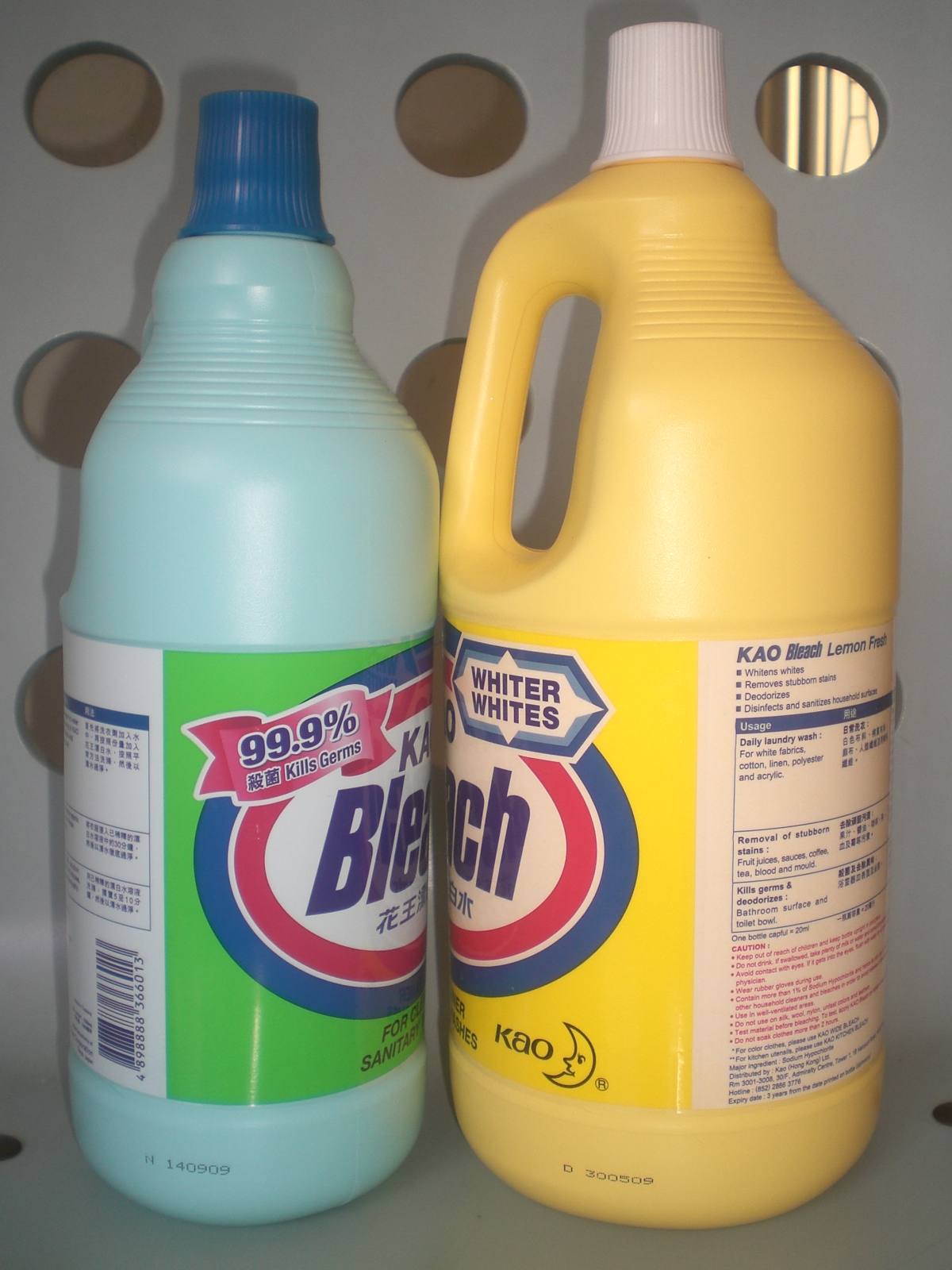
Photo: Bottles of household bleach sold in Hong Kong. Meadohsum, November 11, 2009. CC BY-SA 3.0 · Source. Illustrative household-product photo.
Acetone is commonly handled as a solvent; bleach is a cleaning product. They can reach the same hazardous-waste program, but that does not make them suitable to mix or store together in one container. Keep the original product identity visible so collection staff know what you are bringing.
What is true everywhere
The US EPA’s household hazardous waste guidance covers leftover household products that can ignite, react, corrode or be toxic. It warns that improper disposal can injure collection workers and contaminate wastewater or septic systems.
- Read the label. Follow disposal and storage instructions, including precautions against leaking, ignition and reactions.
- Keep products separate. EPA says never to mix household hazardous waste with other products. Mixing can make waste unsafe and unsuitable for recycling.
- Keep labels and containers. Do not move leftovers into food or drink containers. For a corroding container, contact local hazardous-materials officials or the fire department for handling instructions.
- Ask the local program. A year-round site, scheduled event or other approved collection route may be available. An empty container can still contain hazardous residues.
Household waste has an exclusion from the federal hazardous-waste rules under the Resource Conservation and Recovery Act. EPA explains that state and local requirements still apply. The exclusion is not an instruction to pour a product into a drain or put it in an ordinary cart.
Where it turns local
Seattle and King County: separate solvent and bleach listings
For Seattle and King County, Washington, the county’s household product pages list both solvents and bleach as accepted at hazardous-waste collection sites.
Each container must be 5 gallons or less, with a total household waste limit of 50 gallons per trip. The solvent instructions require lids on containers and sealed containers for solvent-soaked shop towels. Spent solvent needs an identifying label.
The North Seattle Hazardous Waste Facility, 12550 Stone Avenue North, opens Sunday to Tuesday, 9 a.m. to 5 p.m. The South Seattle Hazardous Waste Facility, 8100 2nd Avenue South, opens Thursday to Saturday at the same hours. Check the official facility list for closures.
Businesses have a separate program. King County’s acetone page for eligible businesses describes different quantities, a disposal form and visit limits. Do not apply its nail-salon waste instructions or business limits to a household merely because the chemical name matches.
San Francisco: household chemicals at the HHW Facility
In San Francisco, California, household hazardous chemicals belong in none of the gray, blue or green bins. SF Environment’s disposal page directs residents to the Household Hazardous Waste Facility, 501 Tunnel Avenue.
Drop-off runs Thursday to Saturday, 8 a.m. to 4 p.m., with proof of San Francisco residency. The limit is 15 gallons or 125 pounds, with no containers larger than 5 gallons. Keep household chemicals in their original containers and never combine leftovers.
Residents can also request free home collection through hhw@recology.com or 415-330-1405. Appointments are Wednesday to Saturday mornings and require someone to be present. Describe the products and quantities when booking; this is not permission to leave chemical containers on the sidewalk.
How to find your local answer
- Identify whether you have unused product, spent solvent, contaminated cleanup material or an empty container.
- Read the original label and keep separate products in separate closed containers.
- Open your city or state page, then look for household hazardous waste and the named facility or event.
- Check the program’s product list, eligibility, container size and total quantity before traveling.
- Use the drop-off finder to locate a site, then read its full location record and official source.
Ask the program directly when the product is unlabeled, leaking or outside the published conditions. Do not invent a disposal method from a rule written for another chemical or another jurisdiction.
What this is not
This is household disposal guidance, not an instruction for treating a chemical spill or neutralizing chemicals at home. Business waste, laboratory waste and salon waste can have different rules. The local examples are not a nationwide promise that every hazardous-waste site accepts every solvent or cleaner.


