Waste rules › Holiday lights
Holiday string lights do not belong in curbside recycling. Their long wires can wrap around sorting equipment, stop a line and put workers at risk. If a local drop-off accepts them, use that program. If no verified recycling option is available, put the lights in the trash rather than the recycling cart.
Quick answer
- Keep working lights in use, repair them or donate them if the recipient accepts electrical decorations.
- Never place strings of lights in a curbside recycling cart.
- Remove loose batteries and recycle those through an approved battery program.
- Check a city or county drop-off before driving there; dates, residency rules and accepted parts vary.
- If no local program takes the lights, bag them and use the trash.
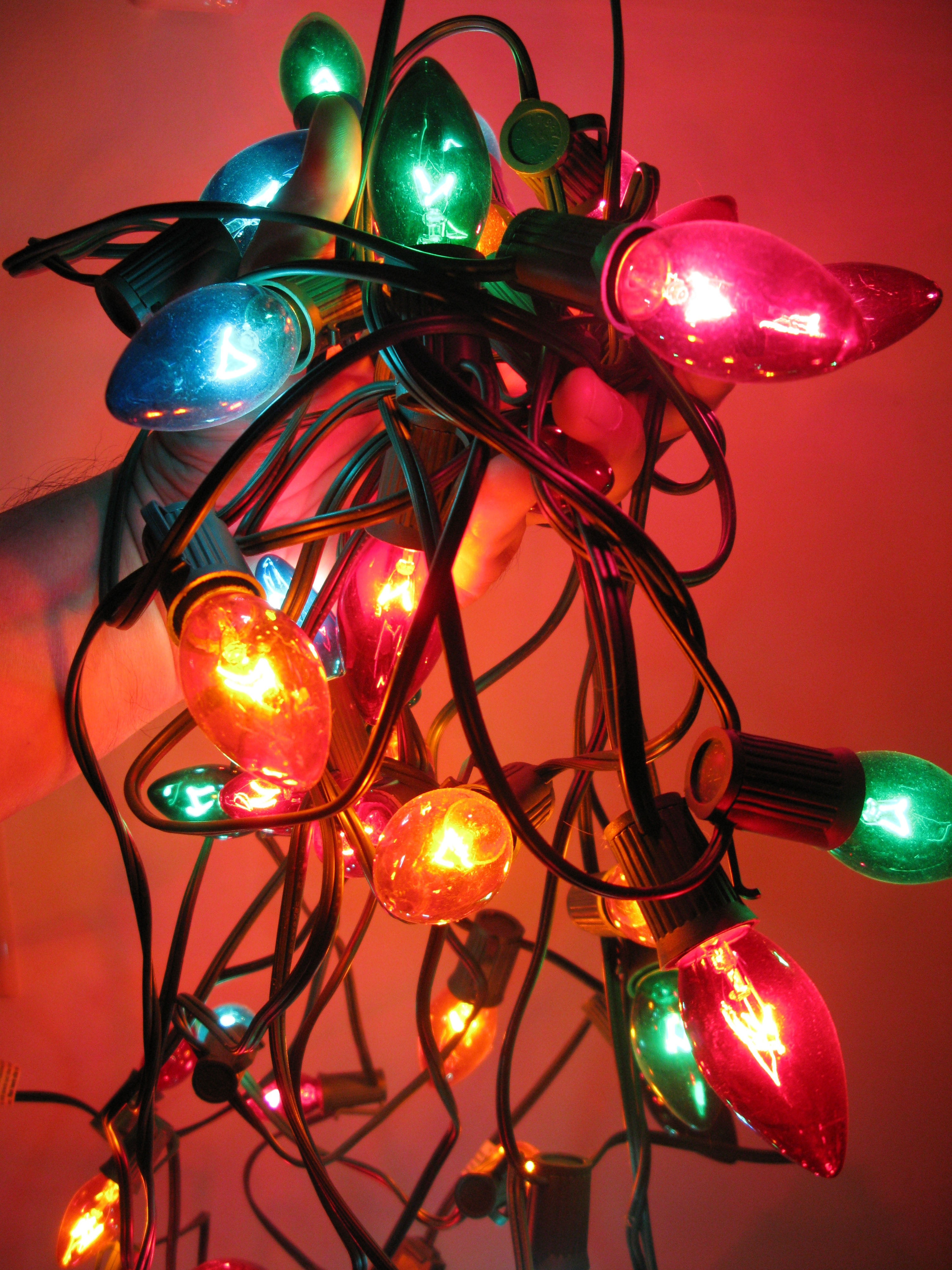
Photo: Tangled holiday lights. frankieleon, October 22, 2008. CC BY 2.0 · Source. Resized for web.
Can holiday lights go in curbside recycling?
No. Seattle Public Utilities calls string lights “tanglers”: cords and wires can wind around the moving parts in a materials-recovery facility. Austin Resource Recovery gives the same reason for keeping them out of the blue cart. The copper inside a cord may be recyclable at a dedicated program, but that does not make the complete light string acceptable in a household recycling bin.
Do not try to solve the problem by cutting a long string into short pieces for the cart. A local program may send the lights to a specialist that separates wire, bulbs and plastic. A curbside sorting line is designed for the bottles, cans, paper and cardboard listed by that program, not mixed electrical cords.
Reuse comes before disposal
Test the set before discarding it. A loose bulb, blown fuse or damaged plug may be replaceable if the manufacturer still provides the correct part and the cord is otherwise sound. Stop using a set with exposed wire, scorch marks, a cracked plug or heat damage.
Working lights can be offered to a reuse shop, school, community group or neighbor, but ask first. Donation bins do not automatically accept electrical decorations, and leaving an unwanted set outside a closed location creates dumping rather than reuse.
Three verified local options
Rules differ even among cities that offer a dedicated route. These examples show why an address-specific check matters.
Seattle and King County
Seattle says string lights cannot go in curbside recycling. King County publishes a seasonal list of businesses and collection sites that take holiday lights for recycling. The county advises residents to check each location’s dates and details; some programs may ask users to remove large bulbs or plastic attachments. If no special option is available, Seattle’s guidance says most nonrecyclable household items can go in the garbage.
Start with the Seattle trash and recycling rules, then check King County’s current list before making a trip.
Saint Paul
Saint Paul’s public works department lists a seasonal string-light collection scheduled for November 30, 2026 through January 17, 2027, with participating public facilities and year-round alternatives on the official page. The city also states that cords and string lights do not belong in curbside recycling.
The date range is a planned future collection window as of this guide’s verification date. Confirm the location and opening hours on Saint Paul’s page before leaving home. See the Saint Paul pickup and recycling guide for the city’s regular services.
Austin
Austin Resource Recovery directs broken string lights to the city’s Recycle & Reuse Drop-off Center and keeps them out of curbside recycling because cords can tangle processing equipment. The drop-off center has its own appointment and eligibility rules, so use the official page to confirm access rather than leaving lights beside a recycling cart.
Local collection details are also linked from the Austin trash and recycling guide.
Remove batteries and loose attachments
Some decorative lights, remotes and battery packs contain removable batteries. Take loose batteries out before handing the lights to a program unless its instructions say otherwise. Cover exposed terminals on lithium batteries with nonconductive tape and follow the local battery disposal guide.
Do not dismantle a sealed light controller or cut into a rechargeable pack. Damaged or swollen lithium batteries need a hazardous-waste or specialist route, not household trash.
A drop-off may also ask you to remove oversized bulbs, stakes, ornaments, garland or plastic reels. Follow the program’s list. “Holiday lights accepted” does not necessarily mean every powered decoration is accepted.
LEDs follow the same local rule
LED strings use less electricity than older incandescent sets, but their disposal route is still controlled by the local program. Do not put LED lights in curbside recycling simply because they contain electronics or metal. Search the exact address or call the named collection site.
If a recycler accepts both LED and incandescent strings, keep them clean and dry and deliver them without bags or attachments unless the instructions request otherwise.
Before you go
Use this short check:
- Test whether the lights can be safely reused.
- Search the city or county site for “holiday lights” or “string lights.”
- Confirm residency, dates, hours and whether an appointment is required.
- Remove batteries and any parts the program excludes.
- If there is no verified special program, use the trash instead of contaminating curbside recycling.
Official sources
- NYC Department of Sanitation: metal, glass, plastic and cartons: string lights are tanglers and do not belong in curbside recycling.
- Seattle Public Utilities: recycle your holidays: string lights are excluded from the recycling cart.
- King County: holiday lights recycling: current local drop-off guidance and preparation notes.
- Saint Paul Public Works: holiday and seasonal disposal: the 2026–27 seasonal window and year-round alternatives.
- Austin Resource Recovery: holiday recycling tips: drop-off guidance and the curbside tangler warning.
- Cuyahoga County Solid Waste District: holiday lights: a year-round district example with accepted and excluded material.
Source and program details checked October 29, 2026. Programs can change after this date; verify the linked local page before drop-off.