How to dispose of a garden hose starts with your local garbage rules, not the recycling symbol. New York City and Portland list unwanted garden hoses as garbage. Keep hoses out of curbside recycling: long flexible items can tangle in sorting machinery.
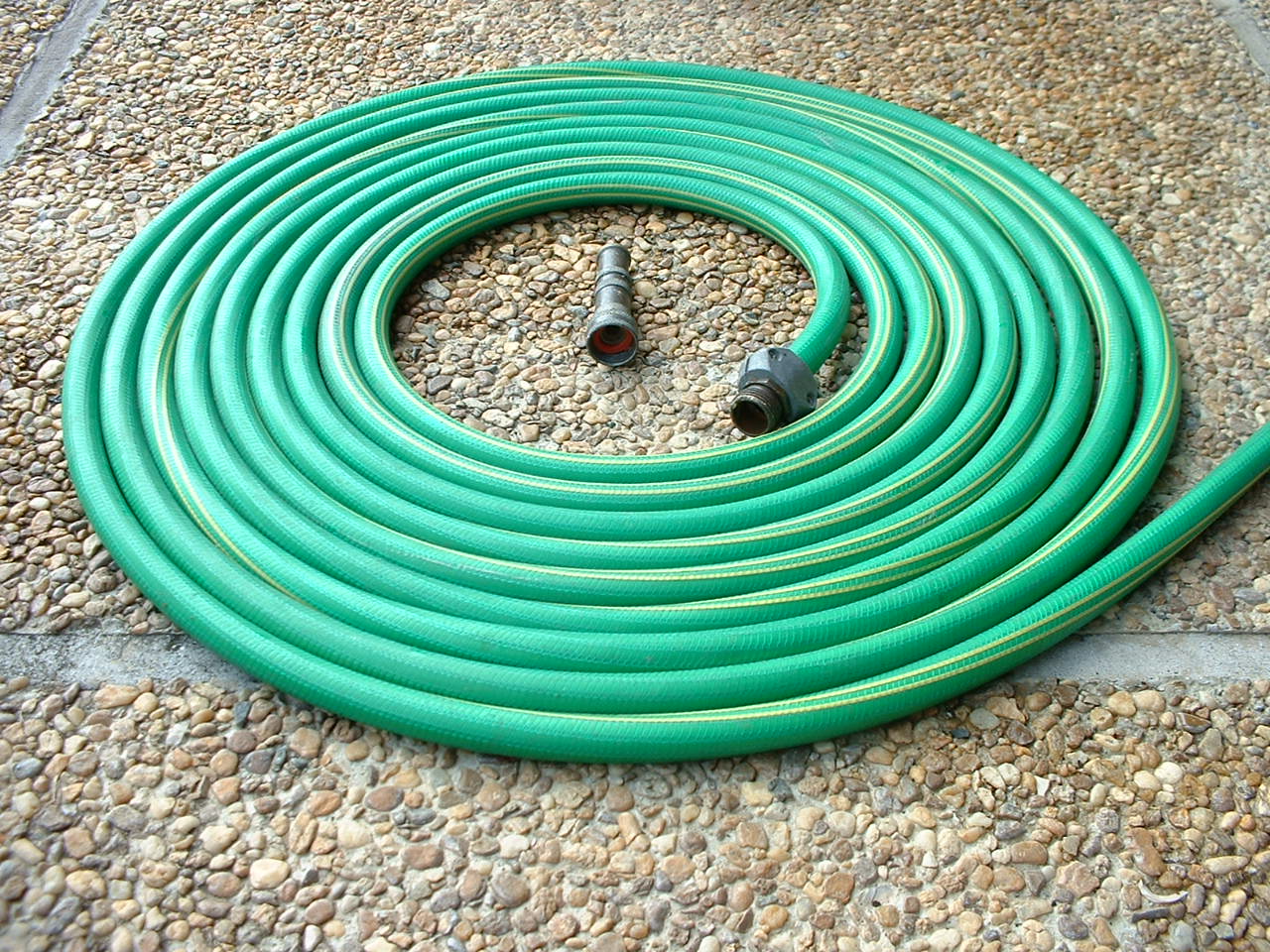
Photo: A green garden hose coiled in a spiral. Nandhp, April 5, 2006. CC BY-SA 3.0 · Source. Unmodified photograph.
Why a hose does not belong with bottles and cans
A hose is a flexible product, not a packaging container. Brevard County’s recycling department specifically excludes rubber and plastic hoses because they can become tangled in the sorting equipment. Its single-stream system is designed around accepted household containers, paper and other listed materials.
Putting a hose in a bag or coiling it neatly does not change the accepted-material list. A metal fitting on one end also does not make the complete hose a metal can. Ask a local recycler before treating a separate fitting as scrap; acceptance depends on that facility.
Where the answer is local
New York City
DSNY’s trash rules list garden hoses among tanglers that belong in trash. The list also includes cords, wires and window blinds. Use the building’s required trash container and set-out arrangement, rather than putting the hose into metal, glass and plastic recycling.
The New York City collection page explains local pickup. The New York hub helps readers distinguish city service from other municipalities.
Portland, Oregon
Portland’s garbage guide expressly allows garden hoses in the garbage bin. That is a local garbage instruction, not a claim that hoses can be processed through the recycling cart.
If an unwanted item is too large for the normal container, Portland directs homeowners to contact their garbage company for an estimate and scheduled bulky pickup. Renters should work with the property manager. See Portland’s collection guide and Oregon resources.
Brevard County, Florida
Brevard’s single-stream guide excludes hoses and explains the sorting hazard. That page establishes a recycling exclusion; it does not assign a garbage collection day or a universal drop-off fee. Confirm those details with the service responsible for the address.
Find the answer for your address
Search the city or county’s official waste tool for “garden hose,” rather than relying on a general plastics list. Ask whether the hose fits the regular garbage service, whether it must be contained, and what to do if it is too bulky. Do not leave a loose coil beside a cart without an accepted set-out route.
A usable hose can be offered for reuse if a recipient wants it. Confirm acceptance before taking one to a donation center. For a disposal facility, check its own accepted list and any resident restrictions before travelling; the drop-off finder is a starting point, not proof that every listed site takes hoses.
What this is not
This guide covers ordinary household watering hoses. It does not cover a chemical-filled sprayer, pressurized cylinder, electrical cable or industrial hose. Describe contamination and the actual product to the local agency before applying ordinary garbage instructions. See household hazardous waste for chemical-waste routes.