
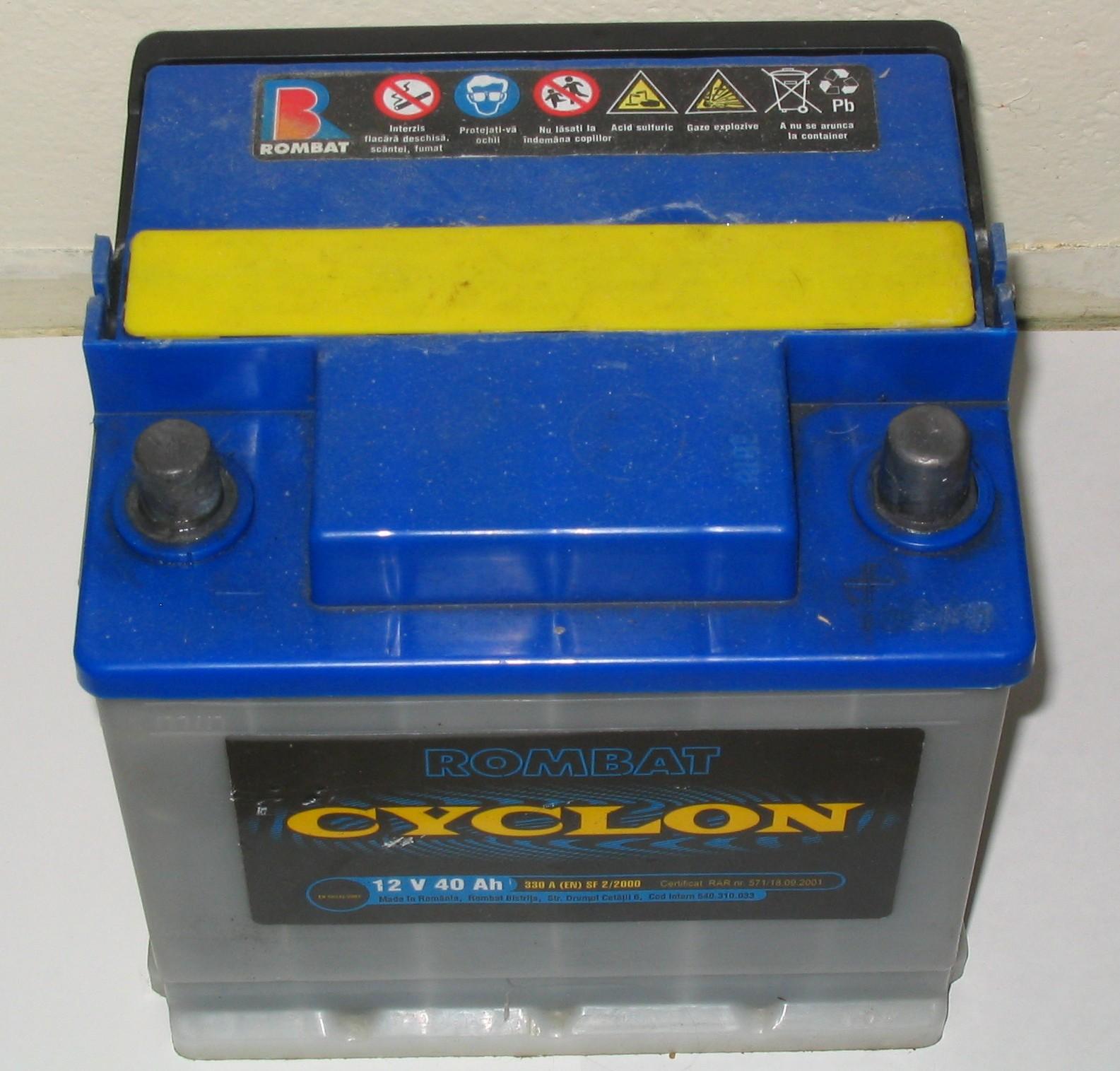
How to recycle a car battery safely starts with one rule: do not put a lead-acid vehicle battery in the trash or in a curbside recycling cart. Take it to a battery retailer or car dealer, or use a local household hazardous waste program. If you are buying a replacement, bring the old battery with you so the seller can accept it and remove any core charge from the purchase.
Photo: Shaddack / Wikimedia Commons, public domain.
What is true everywhere
The practical route is consistent across the United States. The US Environmental Protection Agency says lead-acid batteries from cars, boats, motorcycles, golf carts and similar vehicles should go to a battery retailer or a household hazardous waste program — never household garbage or municipal recycling.
Retail take-back is usually the easiest option. EPA describes a national collection network built around battery stores, auto-parts retailers, dealerships and municipal hazardous-waste sites. Most states support that network with disposal bans, retailer duties or refundable core charges. Even in the five states EPA lists as not having adopted the industry model law — Alabama, Alaska, Delaware, Maryland and Montana — retailer and household hazardous-waste collection still exists.
A core charge is a deposit added when you buy a new battery without returning an old one. Return the used battery under the seller’s rules and the deposit is refunded. EPA says state core charges commonly run from $5 to $20, but the amount and return deadline are local. Keep the receipt until the old battery has been accepted.
- Keep the old battery upright.
- Do not put it in either curbside cart.
- Call the retailer before driving over if you are not buying a replacement.
- If a retailer will not take it, use the city or county household hazardous waste program.
- Ask the receiving site what to do before moving a cracked or leaking battery.
Lead-acid car batteries are heavy and contain lead and sulfuric acid. Do not open, drain or dismantle one. Avoid tipping it, and keep metal tools away from both terminals. If the case is damaged or liquid is visible, keep people and pets away and get instructions from the retailer or hazardous-waste facility before transport.
Why the retailer route works
A spent car battery still has recoverable lead and plastic. EPA reports that 99 percent of lead-acid batteries generated in the United States were recycled in 2018. The collection system works because retailers and dealers provide convenient return points while core charges give buyers a reason to bring old batteries back.
This is different from curbside recycling. A materials recovery facility is not set up to handle a heavy battery containing acid and lead. The battery needs a controlled collection and recycling chain.
If a shop installed the replacement, ask it to keep the old battery. If you installed it yourself, bring the old unit when you buy the replacement or return it within the seller’s allowed window. Online purchases may have different instructions, so check the return process before ordering.
Where it turns local
The destination, fees and deadlines change by state and city.
New York: two batteries a month, even without a purchase
New York’s Department of Environmental Conservation says retailers that sell lead-acid batteries must accept up to two used batteries per person per month free of charge, whether or not the person buys a new battery. If a buyer does not return an old battery with a replacement purchase, the retailer adds a $5 state return incentive payment. The same retailer must refund it when the buyer returns a used battery within 30 days.
That is a New York rule, not a nationwide deadline or price.
Seattle: vehicle batteries go to hazardous-waste collection
Seattle bans batteries from garbage and ordinary recycling. Seattle Public Utilities lists vehicle batteries among the materials accepted at regional household hazardous waste facilities. Its special-item curbside battery pickup excludes car batteries, so a bag-of-batteries appointment is not a substitute.
Start with the Seattle trash and recycling guide, then confirm the current vehicle-battery destination in the city’s official Where Does It Go tool.
Los Angeles: keep batteries out of the blue bin
LA Sanitation says household hazardous waste, including batteries, stays out of the blue recycling bin and goes to a S.A.F.E. Center. A retailer return may still be the easiest route, especially when buying a replacement.
The Los Angeles trash pickup guide links to the city service, and the site’s S.A.F.E. Center at UCLA listing explains that facility’s resident rules. Check the operator before traveling because hours and limits can change.
Denver: auto batteries qualify for hazardous-waste pickup
Denver’s Household Hazardous Waste At-Your-Door program lists auto batteries among accepted items. The city says residents are eligible for one appointment per calendar year, subject to availability, and currently requires a $15 copayment. The program also requires at least three different accepted material types or one accepted material weighing more than 25 pounds.
Those conditions make a retailer return more convenient for many single-battery trips. Use the Denver trash and recycling guide to reach the city’s current service pages.
How to find your local answer
Search your city or county waste site for car battery, vehicle battery, lead-acid battery or household hazardous waste. Confirm four things before leaving home:
- whether the site serves your address;
- whether an appointment or proof of residency is required;
- whether there is a fee, quantity limit or core-charge deadline;
- whether damaged batteries need different handling.
When the official local page is unclear, call a battery retailer and the local household hazardous waste program. Ask about a lead-acid vehicle battery specifically. A general battery drop box may take AA cells and tool batteries but refuse automotive batteries.
Do not assume a scrap yard accepts batteries merely because it takes metal. New York DEC notes that many scrap-metal recyclers accept lead-acid batteries, but each operator sets its own intake rules.
What this is not
This guide is for conventional lead-acid starter batteries used in cars, trucks, motorcycles, boats and similar equipment. It is not an instruction for a high-voltage electric-vehicle traction battery. EPA says large EV batteries should go back to the manufacturer, automobile dealer or installation company.
It is also not a guide to loose lithium-ion batteries, e-bike batteries or small household batteries. Those chemistries have different fire and transport risks. See how to dispose of household batteries for those routes.


