A mercury thermometer should not go in household trash, curbside recycling or down a drain. Keep it intact and use a household hazardous-waste program or another local collection that explicitly accepts mercury-containing equipment.
Quick answer: Put an unbroken mercury thermometer in a rigid, closed container and contact your city or county hazardous-waste program. Confirm the site accepts mercury thermometers before you travel.
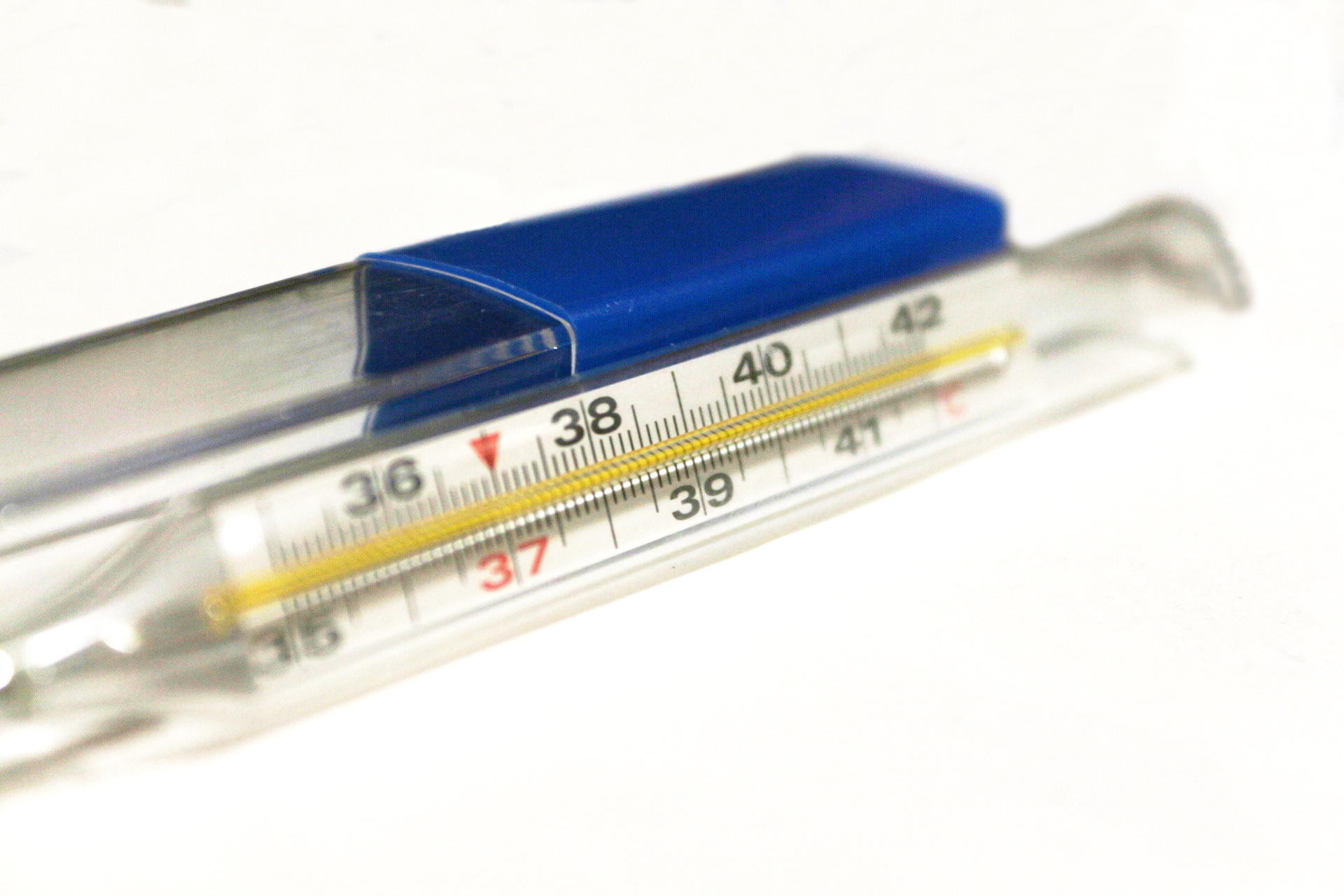
Photo: Mercury medical thermometer. IEPCBM, March 11, 2017. CC0 1.0 · Source. Resized for web.
How to dispose of a mercury thermometer
- Check that it may contain mercury. A glass thermometer with a silver-colored liquid may contain mercury, although some newer silver liquids are mercury-free alloys. Look for a “mercury free” marking on the instrument or its packaging.
- Do not break or dismantle it. Leave the thermometer whole. Do not snap off the bulb, try to drain it or put it in a sharps container unless your local program tells you to.
- Protect it for transport. Put the thermometer in a rigid container with a secure lid. Keep the container upright and away from children and pets.
- Find the right local program. Search your local government’s website for household hazardous waste, mercury-containing equipment or thermometer disposal. Call before visiting because an ordinary transfer station may refuse the item even when a nearby hazardous-waste service accepts it.
- Follow the site’s eligibility rules. Some programs serve residents only, limit quantities or use separate hours for household hazardous waste.
The US Environmental Protection Agency says households can use state or local collection programs for mercury-containing products. Federal household-waste exemptions do not cancel stricter state or local disposal rules.
Why it stays out of the bin
Mercury is toxic and can be released when a thermometer is crushed in a collection truck, sorting facility or landfill. Curbside recycling systems are designed for accepted packaging and containers, not loose hazardous devices.
A transfer station and a household hazardous-waste collection can operate at the same complex but have different acceptance rules. Confirm the program, entrance and hours that apply to mercury thermometers.
Where it turns local
Rules change at city and county lines, so these examples are not interchangeable.
New York City
The New York City Department of Sanitation tells residents not to put mercury items in trash, recycling or a drain. It directs residents to a SAFE Disposal Event or a private hazardous-waste contractor. Start with the New York City trash-pickup page, then confirm the current mercury route on the city source before leaving home.
Seattle and King County, Washington
King County says mercury thermometers are not accepted for ordinary disposal at its solid-waste facilities. Its hazardous-waste program lists thermometers among the household hazardous products that require the dedicated hazardous-waste route. Residents can begin with the Seattle page or the King County page, then use King County’s hazardous-waste program to verify the current location, eligibility and hours.
How to find your local answer
Search your city or county website for “mercury thermometer,” “household hazardous waste” and “mercury-containing equipment.” Check the acceptance list for thermometers specifically; a program that takes fluorescent lamps may not take every mercury device.
Before you travel:
- confirm resident eligibility, hours, quantity limits and appointment rules
- keep the mercury thermometer intact in a rigid, closed container
- use the hazardous-waste entrance or event named by the authority
- carry proof of residency if the program requires it
- if the thermometer broke, follow the authority’s spill instructions before transport
If the mercury thermometer breaks
Do not use a vacuum cleaner or broom on spilled mercury. Keep people and pets away, open exterior windows and close doors to the rest of the home. The EPA advises ventilating the affected room for at least 24 hours after cleanup.
For a small spill from a fever thermometer, use the EPA’s detailed cleanup instructions. Contact your local health department, municipal waste authority or fire department for location-specific disposal instructions. For a larger spill, or if mercury reaches a drain, heating system or porous material, seek professional advice instead of improvising.
The broken mercury thermometer and cleanup materials still need the disposal route specified by the local authority. Do not leave a labeled container at a curb or public drop-off that has not confirmed it accepts mercury.
Mercury-free thermometers
A red, blue or green liquid is generally not mercury. A silver liquid can be mercury or a mercury-free alloy of gallium, indium and tin. The instrument may be marked “mercury free” if it uses the alloy.
When the marking is missing or unreadable, treat a silver-liquid glass thermometer cautiously and ask the local hazardous-waste program. A digital replacement avoids the mercury bulb, but its battery may have separate disposal rules; see the guide to household batteries.
What this is not
This guide covers household fever and room thermometers that may contain mercury. It is not a cleanup plan for a large mercury spill, an industrial instrument, a laboratory incident or mercury released into a drain, heating system or porous building material. Those situations may require the fire department, health department, environmental agency or a professional hazardous-material contractor.
What not to do
- Do not put a mercury thermometer in curbside trash or recycling.
- Do not pour mercury into a sink, toilet or storm drain.
- Do not break a mercury thermometer to make it fit a container.
- Do not vacuum or sweep a mercury spill.
- Do not mail a mercury thermometer to an unverified program.
- Do not leave it outside a closed hazardous-waste site.