How to dispose of smoke detectors depends on the alarm and your local collection rules. Keep an ionization detector intact, remove only batteries the manufacturer says are user-removable, and check the city’s disposal instructions before using the trash. EPA allows household disposal of ionization alarms, but a local recycling or manufacturer return program may offer another route.
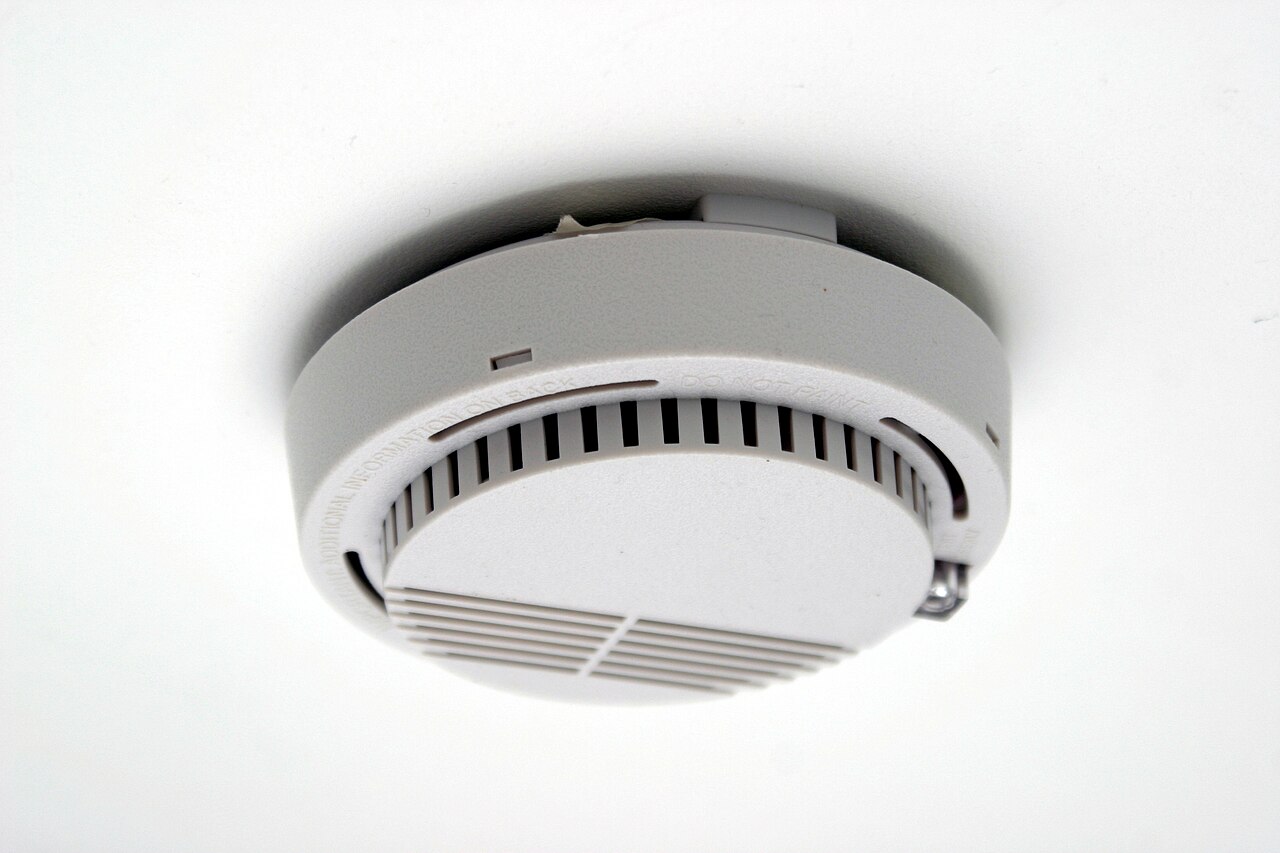
Photo: Ceiling-mounted smoke detector. Tumi-1983, 2007-10-20; levels adjusted by Veikk0.ma. CC BY-SA 3.0 · Source. Resized for web.
What is true nationally
An ionization alarm contains a small americium-241 source. EPA says its shielding keeps the radioactive material contained when the detector is undamaged and handled as directed. Never open the sensing chamber or try to extract the americium. The EPA smoke-detector guidance allows outdated household ionization detectors in household garbage and notes that communities may have separate recycling programs.
That is guidance about the detector, not permission to put every battery in a garbage truck. Read the battery compartment and product instructions. If the alarm has a sealed battery, ask the manufacturer or local waste agency how to handle the complete unit rather than forcing it open.
Before choosing a disposal route, write down the brand and model number and look for an ionization or radioactive-material label. These details let the manufacturer or local agency answer for the actual product. A generic instruction for small electronics may not cover an ionization alarm.
Where it turns local
New York City. NYC311’s residential trash rules permit smoke and carbon monoxide detectors in trash after removing their batteries. The city also points residents to manufacturer take-back programs for ionization units. Use the NYC trash pickup page for set-out instructions and the New York hub for state resources. Battery drop-off options are listed under locations; confirm that a destination accepts the battery chemistry.
Seattle and King County. The county’s household smoke-detector guidance says to remove the battery and put the detector in garbage. Its hazardous-waste collection sites do not accept smoke detectors. Some manufacturers accept returns. The Seattle pickup guide, unincorporated King County guide and Washington hub explain which collection system serves an address. Do not take an alarm to a hazardous-waste site simply because it contains an ionization source.
How to find your local answer
- Identify the model, detector type and battery arrangement without taking the alarm apart.
- Search your city or county waste directory for “smoke detector” or “smoke alarm,” rather than assuming an electronics rule applies.
- Check the manufacturer’s current return instructions. Confirm the model is eligible, where to send it and any packaging or mailing requirements before shipping.
- Ask the local agency about a sealed-battery alarm if its published instructions only say “remove batteries.”
- Follow the confirmed trash or return route. Handle a removable battery separately using the household battery guide.
A facility’s acceptance list matters more than its name. A hazardous-waste depot may accept batteries while refusing the detector attached to them.
What this is not
This guide covers discarded household alarms. It does not authorize dismantling radioactive components or give a disposal route for industrial detection equipment. It also does not diagnose a sounding alarm or replace the manufacturer’s installation, testing and replacement instructions.