To work out how to dispose of cell phones, start with reuse or a phone-specific recycling program, not the household trash or mixed recycling cart. Before handing over a working phone, back up what you need, remove personal information and take out removable SIM and memory cards. Check the receiving program’s instructions before taking a damaged device anywhere.
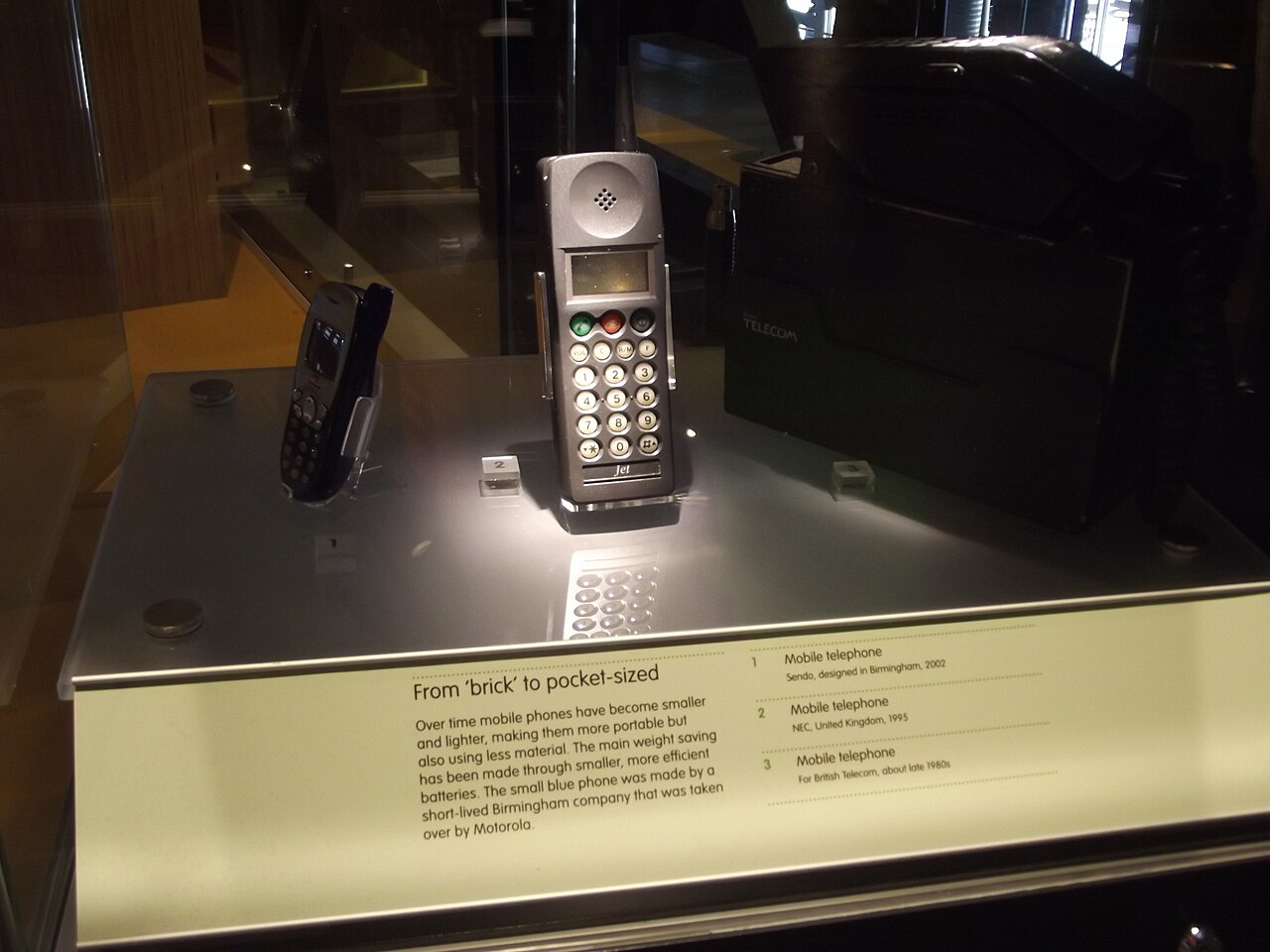
Photo: Historic mobile phones at Thinktank Birmingham Science Museum, photographed April 18, 2014 by ell brown. CC BY-SA 2.0 · Source. Resized for web; archival context photograph.
Keep the phone out of the curbside cart
A phone is an electronic device, even when its screen is broken or its battery no longer holds a charge. The EPA’s electronics guidance directs households toward donation and electronics recycling. It specifically keeps lithium-ion batteries and devices containing them out of household garbage and municipal recycling bins.
The useful question is whether somebody can still use the device. If so, ask a donation or trade-in program about its condition requirements. If it is no longer usable, look for a recycler that lists phones among its accepted items. A recycling symbol on packaging does not tell you which local collection program accepts the phone itself.
Remove personal information before handing it over
The Federal Trade Commission’s phone-disposal advice separates saving your information from removing it. Back up photos, contacts and other files you want to keep. Then follow the manufacturer’s reset instructions and remove any removable SIM or SD card.
Before resetting, make sure you can still sign in to essential accounts from the replacement device. The FTC notes that authenticator apps may need to be reactivated. If your phone number is changing, update accounts that use it for verification.
A broken display can make these steps harder. Ask the manufacturer about that model rather than assuming a recycler will erase it for you. Acceptance for recycling and a data-erasure service are separate questions.
Where it turns local
New York City
New York City’s electronics-disposal instructions list cell phones among items kept out of regular trash and recycling. A store that sells cell-phone service plans accepts phones for recycling. Other options include designated drop-offs and, for eligible buildings with at least ten units, ecycleNYC.
Use the New York City trash and recycling guide and New York state hub for the rest of the local collection rules. A phone-recycling option does not change what belongs in the building’s ordinary recycling bins.
Nashville and Davidson County
Nashville’s electronic-waste program explicitly accepts cellular phones and smartphones at East, Ezell Pike and Omohundro convenience centers. It is a residential service for Metro residents with valid Davidson County identification, with no electronics-recycling fee and a limit of 100 pounds of household electronics per day. Business electronics and out-of-county loads are excluded.
Compare the Nashville city guide, Tennessee hub and the records for East, Ezell Pike and Omohundro before making the trip. Tell the receiving program if a battery is damaged; ordinary acceptance of phones does not establish a safe route for every damaged battery.
How to find your local answer
Search the city or county waste website for “cell phone recycling,” then check the actual accepted-items list. Confirm whether the service is for residents or businesses, whether proof of address is needed and whether the location handles phones with batteries still installed.
Ask separately about fees, opening hours and damaged devices. A store accepting a phone for trade-in may apply different conditions from a recycler accepting a broken handset. Do not send a device by mail until the receiving program has supplied its shipping instructions.
What this is not
This guide concerns household phones. It does not make a battery-only collection box an approved destination for a whole phone, or turn an ordinary recycling bin into an electronics collection point. Loose batteries have their own disposal rules.